What Is Blade Flexibility? A Guide for Kitchen Knives Buyers (2026)
As an Amazon Associate we earn from qualifying purchases. Links on this page are affiliate links.
Understanding Blade Flexibility for Buyers
Blade flexibility explained reveals how much a knife bends under pressure. This spec determines which tasks a blade can handle safely. You should match the flex level to your cutting style. Most kitchen knives fall into three categories: flexible, stiff, or semi-stiff.
A flexible blade bends easily. You will see this in fillet knives. The thin spine allows the blade to curve around fish bones. It also helps in deboning poultry. If you try to chop vegetables with a flexible knife, the blade may warp. This can lead to uneven cuts or damage to the edge. Flexible blades are not for heavy-duty work.
A stiff blade resists bending. Chef’s knives and cleavers usually have high stiffness. The thick spine provides stability. This design supports rock-chopping motions. It also handles dense root vegetables without tipping. Stiff blades transfer force efficiently. They are ideal for precise slicing and dicing. If you need control and power, look for a stiff profile.
Semi-stiff blades offer a middle ground. They bend slightly but return to straight quickly. This category suits general-purpose kitchen knives. You can perform light chopping and some deboning tasks. The balance allows for versatility. Many all-purpose sets include semi-stiff options.
Manufacturers label these specs in product descriptions. Look for terms like "flexible," "rigid," or "semi-flexible." Check the blade thickness near the spine. Thinner spines often indicate more flex. Thicker spines suggest stiffness.
Choosing the right flexibility matters for safety and efficiency. A mismatched blade can slip or break. Consider your primary tasks. Filleting requires flex. Chopping requires stiffness. General prep benefits from semi-stiff options. Understanding this spec helps you select the right tool for your kitchen.
Compare Blade Flexibility Levels
Flexible
A flexible blade bends significantly along its length. This allows the steel to slide close to bones and contours. You should choose this type for filleting fish or removing skin from meat. The blade conforms to the shape of the carcass. This reduces waste and protects the flesh. However, the blade lacks rigidity for heavy chopping. It is not suitable for cutting through joints or hard vegetables. The Mercer Culinary Millennia 7-Inch Flexible Fillet Knife exemplifies this category. Its 7-inch length and high-carbon steel provide the necessary bend. You get precise separation but limited versatility for other kitchen tasks.
Semi-Stiff
A semi-stiff blade offers a balance between bend and rigidity. It provides enough give to navigate bones without excessive floppiness. You should use this type for general boning tasks. It works well for both poultry and larger cuts of meat. The blade maintains control while following the bone structure. This makes it a practical choice for home cooks and butchers. The Victorinox Fibrox Pro 6-Inch Curved Boning Knife fits this profile. Its curved blade and semi-stiff nature allow for controlled cuts. You gain stability for deboning while retaining some adaptability. This versatility makes it a reliable tool for various meat preparations.
Stiff
A stiff blade does not bend under normal pressure. It provides maximum control and precision during cutting. You should select this type for deboning chicken or ham. The rigidity helps you separate meat from bone with accuracy. It is ideal for tasks requiring firm, direct cuts. The blade resists bending, ensuring clean lines and minimal damage to the meat. The Mercer Culinary Renaissance 6-Inch Stiff Boning Knife demonstrates this trait. Its forged German steel and ergonomic handle offer robust performance. You get precise control for detailed work. However, the lack of flexibility limits its use for filleting or curved cuts.
Is Flexibility Worth Your Attention?
Who needs it
You need this spec if you prepare raw fish or poultry regularly. Flexible blades bend easily, allowing the steel to follow bone contours closely. This reduces waste and keeps your cuts clean. If you fillet salmon or debone chicken often, a stiff blade will struggle. It cannot adapt to curves. Semi-stiff options offer a middle ground for general prep work. They handle light bending without sacrificing too much control. You should prioritize flexibility if your kitchen routine involves frequent raw protein preparation. The ability to maneuver around joints and skin is critical for precision. Without the right flex, you risk tearing meat or slipping. This spec directly impacts your safety and efficiency in the kitchen. Match your typical tasks to the blade’s bend capacity.
Who can skip it
You can ignore this spec if you mostly chop vegetables or slice cooked meats. Stiff blades provide stability for rock-chopping motions. They do not bend, which keeps your cuts consistent and safe. If you use a chef’s knife for daily veg prep, flexibility adds no value. It may even hinder your work by causing unwanted movement. Focus instead on edge retention and handle comfort. These factors matter more for heavy-duty chopping. Semi-stiff blades work well here, offering enough rigidity for most tasks. You do not need specialized flex for general household cooking. Prioritize a blade that feels balanced in your hand. The steel type and grind angle will serve you better than bend capacity. Keep your knife sharp and stable for everyday efficiency.
Blade Flex Terms
Blade flexibility
The ability of the steel to bend along its length. This spec determines how the knife handles curved cuts and tight spaces around bones or joints.
Flexible blade
A thin blade that bends significantly. It slides easily along contours, making it ideal for filleting fish or removing skin from meat with minimal waste.
Stiff blade
A thick blade that resists bending. It provides stability for heavy chopping tasks like slicing through vegetables or breaking down large cuts of meat.
Semi-stiff blade
A middle-ground option with moderate bend. It offers versatility for general kitchen tasks, balancing control for light slicing with enough rigidity for standard prep work.
Filleting
The process of removing flesh from bones. Flexible blades excel here by conforming to the skeleton, allowing for clean cuts and maximizing yield from raw fish.
Bone contour
The irregular shape of a skeleton. A flexible blade follows these curves closely, ensuring you do not cut away valuable meat or leave flesh on the bone.
Quick picks
Our 6 picks

Mercer Culinary Millennia 7-Inch Flexible Fillet Knife
Best for: filleting meat and fish
- Blade Flexibility
- Flexible (what this guide is about)
- Blade Length
- 7-Inch
- Knife Type
- Fillet Knife
- Blade Material
- High-carbon Japanese steel
- Color
- Black
- Dimensions
- 5 × 1 × 15 inches
View on Amazon: Mercer Culinary Millennia 7-Inch Flexible Fillet Knife Affiliate link
This Mercer Culinary knife features a 7-inch flexible blade made from high-carbon Japanese steel. The design prioritizes filleting tasks, allowing you to easily remove flesh from bones. Its ergonomic handle includes textured finger points for a secure, non-slip grip. You should choose this tool if you need a dedicated fillet knife with a stiff yet pliable edge for precise work on fish or poultry.
Pros
- 7-inch flexible blade for precise filleting
- High-carbon Japanese steel for sharpness
- Textured ergonomic handle for non-slip grip
- One-piece construction for durability
Cons
- Requires hand washing only
- Blade is flexible, not stiff
- Black handle may show wear
Good fit if
- You need a dedicated fillet knife
- You prefer high-carbon steel blades
- You want a textured grip
Skip if
- You need a stiff boning knife
- You prefer dishwasher safe knives
- You want a curved blade
Verdict: Mercer Millennia 7-Inch Flexible Fillet Knife is a specialized tool for removing flesh from bones. It suits buyers who prioritize blade flexibility and high-carbon steel performance over versatility.

Victorinox Fibrox Pro 6-Inch Curved Boning Knife
Best for: boning thick meats with control
- Blade Flexibility
- Semi-Stiff (what this guide is about)
- Blade Length
- 6 in
- Knife Type
- Boning
- Blade Material
- Stainless steel
- Handle Material
- Fibrox Pro
- Blade Profile
- Curved
View on Amazon: Victorinox Fibrox Pro 6-Inch Curved Boning Knife Affiliate link
This Victorinox boning knife features a 6-inch stainless steel blade with a semi-stiff, curved profile. It is designed for removing meat from bones while maintaining control. The handle is made of Fibrox Pro, providing a secure grip even when wet. The blade weighs 4.2 ounces and measures 11.2 inches in total length. It meets NSF standards for public health. This tool suits buyers who need a balance between flexibility and rigidity for delicate but thick cuts.
Pros
- Semi-stiff curved blade allows for smooth cuts around bones
- Fibrox Pro handle offers a non-slip grip when wet
- 6-inch stainless steel blade meets NSF standards
- Weighted and balanced for easy handling
Cons
- Semi-stiff blade lacks the full flexibility of dedicated fillet knives
- Curved blade profile may not suit users who prefer straight edges
- Blade length is limited to 6 inches
Good fit if
- You need a knife that balances flexibility and stiffness for boning
- You prefer a non-slip handle for wet conditions
- You work with thick meats like beef or pork
Skip if
- You require a fully flexible blade for filleting fish
- You prefer a straight blade profile for precision work
- You need a blade longer than 6 inches
Verdict: Victorinox Fibrox Pro 6" Semi-Stiff Boning is a practical tool for butchers and home cooks who need a reliable boning knife. It fits buyers who value a secure grip and a blade that can navigate bones without being too floppy.
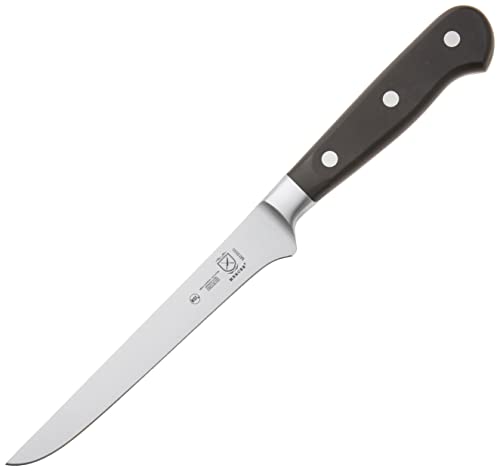
Mercer Culinary Renaissance 6-Inch Stiff Boning Knife
Best for: deboning chicken and ham with precision
- Blade Flexibility
- Stiff (what this guide is about)
- Blade Length
- 6 in
- Knife Type
- Boning
- Blade Material
- High-carbon German cutlery steel
- Construction
- Forged
- Dimensions
- 14.8 × 0.56 × 4.13 inches
View on Amazon: Mercer Culinary Renaissance 6-Inch Stiff Boning Knife Affiliate link
This Mercer Culinary Renaissance knife is a 6-inch stiff boning tool forged from high-carbon German steel. The blade width is 0.56 inches, providing rigidity for separating meat from bone. It features a triple-riveted ergonomic handle and rounded spine for comfort. You should choose this if you need a durable, professional-grade knife for deboning chicken, ham, or fish. It requires hand washing to maintain sharpness.
Pros
- Forged from high-carbon German cutlery steel for lasting sharpness
- Stiff blade design ideal for separating meat from bone
- Triple-riveted ergonomic handle with rounded spine for comfort
- 6-inch blade length offers precise control
Cons
- Requires hand washing to preserve the blade finish
- Heavier build at 4.97 ounces compared to some fillets
- Not suitable for flexible cutting tasks like filleting fish
Good fit if
- You need a stiff blade for deboning poultry or ham
- You prefer forged steel for durability and edge retention
- You want a 6-inch knife for general butchery tasks
Skip if
- You require a flexible blade for filleting fish
- You prefer lightweight knives under 4 ounces
- You want a dishwasher-safe knife for easy cleanup
Verdict: Mercer Renaissance 6-Inch Stiff Boning Knife is a robust option for home cooks who prioritize rigid control when deboning meat. Its forged German steel and ergonomic handle make it a reliable tool for separating bone from flesh.

Victorinox Wood 4.7-Inch Semi-Stiff Boning Knife
Best for: Precise deboning with a curved semi-stiff blade
- Blade Flexibility
- Semi-Stiff (what this guide is about)
- Blade Length
- 5"
- Knife Type
- Boning Knife
- Blade Material
- High-carbon stainless steel
- Handle Material
- Wood
- Blade Profile
- Curved
View on Amazon: Victorinox Wood 4.7-Inch Semi-Stiff Boning Knife Affiliate link
This Victorinox boning knife features a 5-inch curved blade with semi-stiff flexibility. The design allows for precise deboning and carving tasks. It includes a brown wooden handle that fits comfortably in your hand. The blade maintains its shape and edge for many uses before needing sharpening. Weighing 3.04 ounces, it is lightweight for controlled work. This tool suits those who need a balance between flexibility and rigidity.
Pros
- Curved semi-stiff blade design
- 5-inch blade length
- Brown wooden handle
- Lightweight at 3.04 ounces
- Maintains edge well
Cons
- Wooden handle requires more care than synthetic materials
- Shorter 5-inch blade than some 7-inch competitors
- Semi-stiff flexibility may not suit delicate filleting
Good fit if
- You need a curved blade for deboning
- You prefer a wooden handle for grip
- You want a semi-stiff blade for control
Skip if
- You need a fully flexible fillet knife
- You prefer a synthetic, dishwasher-safe handle
- You require a longer 7-inch blade
Verdict: Victorinox 5" Curved Semi-Stiff Boning Knife offers a balanced semi-stiff blade for precise work. It fits buyers who want a wooden handle and a curved profile for general boning tasks.

Mercer Culinary Genesis 7-Inch Flexible Fillet Knife
Best for: Filleting meat and fish with a 7-inch blade
- Blade Flexibility
- Flexible (what this guide is about)
- Blade Length
- 7 in
- Knife Type
- Fillet
- Blade Material
- High-carbon German steel
- Construction
- Precision-forged
- Edge Type
- Taper-ground
View on Amazon: Mercer Culinary Genesis 7-Inch Flexible Fillet Knife Affiliate link
This Mercer Culinary Genesis fillet knife features a 7-inch flexible blade made from precision-forged high-carbon German steel. The taper-ground edge provides sharpness for filleting tasks. It weighs 6.4 ounces and includes a black ergonomic handle for a secure grip. This tool is designed for removing flesh from bones in meat and fish. It suits buyers who need a dedicated flexible blade for delicate preparation work.
Pros
- 7-inch flexible blade for filleting
- Precision-forged high-carbon German steel
- Taper-ground edge for sharpness
- Ergonomic non-slip handle
Cons
- Requires hand washing only
- Single-purpose fillet design
- Heavier than some carbon steel options
Good fit if
- You need a dedicated fillet knife
- You prefer forged steel construction
- You want a 7-inch blade length
Skip if
- You need a stiff boning knife
- You prefer dishwasher-safe knives
- You want a semi-stiff blade
Verdict: Mercer Culinary 7-Inch Flexible Fillet Knife offers a forged German steel blade with a taper-ground edge for precise filleting. It fits buyers who require a 7-inch flexible blade for removing flesh from bones.

Mercer Culinary 5.9" Stiff Curved Boning
Best for: Deboning chicken and ham with a stiff blade
- Blade Flexibility
- Stiff (what this guide is about)
- Blade Length
- 5.9-Inch
- Knife Type
- Curved Boning Knife
- Blade Material
- High-carbon German steel
- Construction
- Precision-forged
- Handle Material
- Glass reinforced nylon
View on Amazon: Mercer Culinary 5.9" Stiff Curved Boning Affiliate link
This Mercer Culinary BPX model features a 5.9-inch curved boning knife with a stiff blade made from high-carbon German steel. The ice-hardened construction increases blade strength for precise cuts. It includes a textured, glass-reinforced nylon handle for a secure grip. This knife is designed for separating meat from bone and trimming fat. It suits you if you need a durable tool for deboning tasks.
Pros
- Stiff blade flexibility for precise bone separation
- High-carbon German steel with ice-hardened strength
- Textured glass-reinforced nylon handle for non-slip grip
- Curved blade profile aids in trimming fat and sinew
Cons
- Requires hand washing to maintain performance
- Shorter 5.9-inch blade length limits reach
- Heavier build at 5.3 ounces compared to lighter fillets
Good fit if
- You need a stiff blade for deboning chicken or ham
- You prefer a textured handle for a secure grip
- You want a precision-forged steel blade for durability
Skip if
- You require a flexible blade for filleting fish
- You prefer a dishwasher-safe knife for easy care
- You need a longer blade for larger cuts of meat
Verdict: Mercer Culinary BPX 5.9" Stiff Boning Knife offers a stiff, high-carbon steel blade ideal for deboning. It fits you if you prioritize blade strength and a secure grip for separating meat from bone.
Specifications side by side
| Spec | Mercer Culinary Millennia 7-Inch Flexible Fillet Knife | Victorinox Fibrox Pro 6-Inch Curved Boning Knife | Mercer Culinary Renaissance 6-Inch Stiff Boning Knife | Victorinox Wood 4.7-Inch Semi-Stiff Boning Knife | Mercer Culinary Genesis 7-Inch Flexible Fillet Knife | Mercer Culinary 5.9" Stiff Curved Boning |
|---|---|---|---|---|---|---|
| Blade Length | 7-Inch | 6 in | 6 in | 5" | 7 in | 5.9-Inch |
| Knife Type | Fillet Knife | Boning | Boning | Boning Knife | Fillet | Curved Boning Knife |
| Blade Material | High-carbon Japanese steel | Stainless steel | High-carbon German cutlery steel | High-carbon stainless steel | High-carbon German steel | High-carbon German steel |
| Construction | not stated | not stated | Forged | not stated | Precision-forged | Precision-forged |
| Edge Type | not stated | not stated | not stated | not stated | Taper-ground | not stated |
| Handle Material | not stated | Fibrox Pro | not stated | Wood | not stated | Glass reinforced nylon |
| Blade Flexibility | Flexible | Semi-Stiff | Stiff | Semi-Stiff | Flexible | Stiff |
| Blade Profile | not stated | Curved | not stated | Curved | not stated | Curved |
| Color | Black | Black | Stiff Boning Knife | Brown | Black | Curved Boning Knife – Stiff |
| Recommended Use | not stated | Boning | Boning | Boning | not stated | Boning |
| Dimensions | 5 × 1 × 15 inches | 11.2 × 1.77 × 0.87 inches | 14.8 × 0.56 × 4.13 inches | 9.92 × 1.61 × 0.75 inches | 14.9 × 0.75 × 4.13 inches | 8 × 3.5 × 0.5 inches |
| Weight | 4.37 ounces | 4.2 ounces | 4.97 ounces | 3.04 ounces | 6.4 ounces | 5.3 ounces |
| Size | 7" | 5.5" | 6" | 4.7" | 7" | 5.9" |
| Model | M22807 | 5.6603.15BK | M23550 | 5.6606.12 | M20307 | M13703 |
Frequently asked questions
What is the difference between a flexible and a stiff blade?
A flexible blade bends significantly along its length to follow contours. A stiff blade resists bending to provide rigid control. You should choose flexible for filleting fish. You should choose stiff for deboning thick meats like chicken or ham. The difference determines how the steel interacts with bone and joints.
Which knife is best for filleting fish?
You should use a flexible blade for filleting fish. The Mercer Culinary Millennia 7-Inch Flexible Fillet Knife is designed for this task. Its blade bends to slide close to bones. This removes flesh cleanly. The 7-inch length offers reach while maintaining control during delicate cuts.
Is a semi-stiff boning knife good for home cooks?
Yes, a semi-stiff blade offers a balance of control and maneuverability. The Victorinox Fibrox Pro 6-Inch Curved Boning Knife fits buyers who need a secure grip. It navigates bones without being too floppy. This level of flexibility suits general boning tasks for poultry and pork.
How does blade width affect flexibility?
Blade width influences stiffness. A wider blade generally resists bending more than a narrow one. The Mercer Culinary Millennia has a 1-inch width. The Victorinox Fibrox Pro has a 1.77-inch width. The narrower profile of fillet knives aids flexibility, while wider boning blades provide stability.
What is the purpose of a curved blade profile?
A curved blade profile aids in precise deboning. It allows the tip to pivot around joints. The Victorinox Wood 4.7-Inch Semi-Stiff Boning Knife features this shape. It helps you navigate tight spaces. The curve keeps the edge in contact with the bone during intricate cuts.
When should I use a stiff boning knife?
Use a stiff boning knife for deboning chicken and ham with precision. The Mercer Culinary Renaissance 6-Inch Stiff Boning Knife provides rigid control. It separates bone from flesh without bending. This is ideal when you need to apply firm pressure or cut through dense connective tissue.
Does blade length matter for flexibility?
Blade length affects reach but not inherent flexibility. A 7-inch blade offers more surface area than a 5.5-inch one. The Mercer Culinary Genesis 7-Inch Flexible Fillet Knife uses a longer blade for extensive fillets. The Victorinox Fibrox Pro 6-Inch offers a shorter, more manageable length for smaller birds.
What weight range is typical for boning knives?
Boning knives typically weigh between 3 and 6 ounces. The Victorinox Wood knife weighs 3.04 ounces. The Mercer Culinary Genesis weighs 6.4 ounces. Heavier blades may require less hand pressure. Lighter blades offer more agility. You should choose based on your preference for control versus momentum.