Blade Material Explained: What It Means for Kitchen Knives
As an Amazon Associate we earn from qualifying purchases. Links on this page are affiliate links.
Understanding Blade Material Options
The blade material defined in product listings determines how your knife performs during daily use. This spec, often called blade material explained in detailed guides, indicates the alloy composition of the cutting edge. You will see four common categories on retailer pages. Each offers distinct trade-offs in maintenance, sharpness, and durability.
Stainless steel is the most common choice for home cooks. It contains chromium, which prevents rust and staining. You do not need to dry the blade immediately after washing. However, standard stainless steel can be harder to sharpen to a fine edge compared to other alloys. It offers a balance of convenience and performance for general tasks.
High-carbon stainless steel adds more carbon to the mix. This increase allows the steel to hold a sharper edge for longer periods. The material is still resistant to corrosion due to the chromium content. You may notice it requires slightly more care than basic stainless steel, but it rewards you with better cutting precision.
German stainless steel refers to a specific type of soft, ductile steel often used in European-style knives. This material is easy to sharpen and resists chipping. It is ideal for users who prefer frequent maintenance over long-term edge retention. The steel is tough and reliable for heavy-duty chopping.
Damascus steel features a layered pattern created by folding different types of steel together. This construction is often aesthetic, but it can also combine the best properties of each layer. You might find a hard core for sharpness and a softer outer layer for durability. The pattern does not guarantee performance, so you must check the underlying steel type.
When shopping, look at the specific alloy grade or manufacturer description. Do not assume all stainless steels behave the same. The right choice depends on how often you sharpen and what foods you cut most often.
Blade Material Options Compared
Stainless Steel
Stainless steel resists rust and requires minimal maintenance. You get a durable blade that handles daily wear without special care. The trade-off is that it may not hold the sharpest edge for long. The Imarku 8-Inch Japanese Gyutou Chef Knife uses SUS440A steel. It offers a sturdy, rust-resistant option for cooks who prioritize durability. This material suits those seeking a reliable, all-purpose chef knife. You benefit from easy cleaning and low upkeep. The blade remains functional for everyday chopping and slicing tasks. It is a practical choice for general kitchen use where convenience matters most.
High-Carbon Stainless Steel
This alloy combines carbon for hardness with stainless elements for corrosion resistance. You get a blade that holds an edge longer than standard stainless steel. It offers better sharpness retention for precise tasks. The Imarku 6-Inch High-Carbon Steel Boning Knife exemplifies this balance. It provides a durable, high-hardness blade for precise filleting. This material suits buyers who value ergonomic control and corrosion resistance. You can use it for dedicated deboning tasks. The trade-off is that it may require more attention than basic stainless. It remains a solid choice for cooks who need a specialized tool for meat preparation.
German Stainless Steel
German stainless steel is known for its toughness and corrosion resistance. You get a blade that is less brittle and more forgiving. It is ideal for heavy-duty tasks like chopping vegetables. The VITUER 4-Inch German Steel Paring Knife Set offers a practical solution for small kitchen tasks. It suits users who value corrosion resistance and included safety sheaths. The MOSFiATA 7-Inch Forged Santoku Knife also uses this steel. It provides a sturdy, full-tang blade with a precise edge angle. You benefit from a durable design that handles daily chopping. The trade-off is that it may not achieve the extreme sharpness of harder steels.
Damascus Steel
Damascus steel features layers of different metals for strength and aesthetics. You get a blade that is both sharp and visually distinct. The Yatoshi 6-Piece Damascus Steel Knife Block Set delivers high-hardness VG-10 steel. It fits cooks who prioritize sharpness and organized countertop storage. The magnetic block system adds convenience. You benefit from a blade that holds a fine edge for precision cutting. The trade-off is the higher cost and maintenance complexity. It suits users who want a premium tool for detailed work. The layered construction provides durability while maintaining a keen cutting edge for various kitchen tasks.
Is Blade Material Worth Your Attention
Who needs it
You should pay close attention to this specification if you cook frequently and value edge retention. High-carbon stainless steel offers a superior balance of hardness and corrosion resistance. It holds a sharper edge longer than standard stainless steel, which means you spend less time sharpening. Damascus steel provides similar performance with added aesthetic appeal, though it requires more care to prevent staining. If you prefer a traditional, razor-sharp edge and do not mind occasional maintenance, these materials are ideal. German stainless steel is also a strong choice for those who want durability and ease of use without the high maintenance of carbon steel. These options suit serious home cooks who prioritize performance and longevity over convenience. The extra effort to maintain these blades is often worth the improved cutting experience and reduced sharpening frequency. You will notice the difference in precision and control during daily tasks.
Who can skip it
You can ignore detailed blade material comparisons if you prioritize low maintenance above all else. Standard stainless steel is sufficient for occasional use. It resists rust and stains well, requiring only basic washing and drying. If you do not cook daily, the enhanced edge retention of high-carbon options offers little practical benefit. You can prioritize ease of care and affordability instead. Basic stainless steel knives handle everyday tasks adequately without demanding special attention. They are less prone to chipping and easier to store. For casual cooks, the complexity of Damascus or high-carbon steels adds unnecessary steps. Focus on handle comfort and balance rather than alloy composition. These factors influence your experience more significantly for light use. Simple stainless steel provides reliable performance without the need for specialized sharpening tools or careful drying routines. It is a practical choice for those who want a tool that works without fuss.
Blade Material Glossary
Blade Material
The specific metal alloy used for the cutting edge. Common options include stainless steel for rust resistance and high-carbon steel for superior edge retention and sharpness.
Construction
How the blade is assembled. A full tang means the metal extends through the handle, providing balance and durability, while a partial tang stops inside the handle.
Storage Type
How the knife is kept when not in use. Options include magnetic strips, knife blocks, or drawer inserts. The right type protects the edge and ensures safety.
Edge Type
The shape of the cutting bevel. A straight edge slices cleanly, while a serrated edge grips tough skins. Some blades feature a combination of both for versatility.
Features
Additional design elements like bolster guards, finger grooves, or hollow handles. These specs enhance grip comfort, safety, or storage capacity for specific culinary tasks.
Blade Flexibility
The degree to which the blade bends. A flexible blade suits filleting fish, while a rigid blade provides stability for chopping vegetables or breaking down poultry.
Blade Profile
The curvature and shape of the blade. A convex profile offers a sharp, durable edge, while a hollow grind reduces friction to prevent food from sticking.
Color
The visual finish of the blade, such as black coating or polished steel. This spec affects appearance and may indicate a non-stick or corrosion-resistant surface treatment.
Quick picks
| # | Product | Best for | Price |
|---|---|---|---|
| 1 | Imarku 8-Inch Japanese Gyutou Chef Knife | everyday chopping and slicing tasks | Check price of Imarku 8-Inch Japanese Gyutou Chef Knife on Amazon |
| 2 | VITUER 4-Inch German Steel Paring Knife 4-Piece Set | Peeling and slicing small fruits and vegetables | Check price of VITUER 4-Inch German Steel Paring Knife 4-Piece Set on Amazon |
| 3 | Yatoshi 6-Piece Damascus Steel Knife Block Set | Precision cutting and organized storage | Check price of Yatoshi 6-Piece Damascus Steel Knife Block Set on Amazon |
| 4 | Orblue 8-Inch Stainless Steel Bread Knife | slicing crusty bread and bagels | Check price of Orblue 8-Inch Stainless Steel Bread Knife on Amazon |
| 5 | Imarku 6-Inch High-Carbon Steel Boning Knife | Dedicated deboning and filleting tasks | Check price of Imarku 6-Inch High-Carbon Steel Boning Knife on Amazon |
| 6 | MOSFiATA 7-Inch Forged Santoku Knife | Vegetable chopping with a sturdy German steel blade | Check price of MOSFiATA 7-Inch Forged Santoku Knife on Amazon |
Our 6 picks

Imarku 8-Inch Japanese Gyutou Chef Knife
Best for: everyday chopping and slicing tasks
- Blade Material
- Stainless Steel (what this guide is about)
- Blade Length
- 8"
- Knife Type
- Gyutou Chef Knife
- Blade Hardness
- 56-58 HRC
- Handle Material
- Pakkawood
- Style
- Japanese
View on Amazon: Imarku 8-Inch Japanese Gyutou Chef Knife Affiliate link
This imarku gyutou chef knife uses SUS440A high-carbon stainless steel for a balance of edge retention and rust resistance. The blade hardness measures 56-58 HRC, offering greater durability than standard knives. It features an ergonomic Pakka wood handle for comfort during extended use. Weighing 6.9 ounces with an 8-inch blade, it is designed for versatile chopping, slicing, and dicing tasks in your kitchen.
Pros
- SUS440A high-carbon stainless steel blade with 0.6-0.75% carbon content
- 56-58 HRC Rockwell hardness for increased sturdiness
- Ergonomic Pakka wood handle for reduced hand fatigue
- 16-18% chrome content for corrosion resistance
Cons
- 56-58 HRC hardness is lower than premium Japanese knives exceeding 60 HRC
- Black finish may show scratches or wear over time
- Pakka handle requires hand washing to maintain integrity
Good fit if
- You want a versatile gyutou for daily chopping and slicing
- You prefer a durable blade that resists rust
- You need an ergonomic handle for long prep sessions
Skip if
- You require ultra-sharp 60+ HRC edge retention
- You prefer traditional Japanese laminated steel
- You want a lighter blade for precise work
Verdict: imarku 8 Inch SUS440A Gyutou provides a sturdy, rust-resistant option for cooks who prioritize durability and comfort over maximum edge sharpness. It suits those seeking a reliable, all-purpose chef knife for everyday kitchen tasks.

VITUER 4-Inch German Steel Paring Knife 4-Piece Set
Best for: Peeling and slicing small fruits and vegetables
- Blade Material
- German Stainless Steel (what this guide is about)
- Blade Length
- 4 Inch
- Knife Type
- Paring
- Blade Hardness
- 56±2 HRC
- Handle Material
- PP Plastic
- Recommended Use
- Vegetables, Peeling, Fruit
View on Amazon: VITUER 4-Inch German Steel Paring Knife 4-Piece Set Affiliate link
This VITUER set includes four 4-inch paring knives and four protective sheaths. The blades are forged from German stainless steel (3Cr13MoV) with a hardness of 56±2 HRC. You get ergonomic PP handles for a secure grip. The rainbow-colored design adds a visual touch to your kitchen. It is designed for peeling, slicing, and mincing small fruits and vegetables. The set is BPA-free and lead-free.
Pros
- German stainless steel (3Cr13MoV) blade material
- 56±2 HRC Rockwell hardness for edge retention
- Includes 4 protective knife sheaths
- Ergonomic PP plastic handle for comfort
- BPA-free and lead-free construction
Cons
- 4-inch blade length limits use on larger vegetables
- PP plastic handle lacks premium material feel
- Hand wash only recommended to preserve finish
Good fit if
- You need a dedicated tool for peeling and small tasks
- You want a complete set with protective covers
- You prefer German stainless steel for corrosion resistance
Skip if
- You require a blade longer than 4 inches
- You prefer high-carbon steel for extreme sharpness
- You need a dishwasher-safe handle material
Verdict: VITUER 4 Inch German Stainless Steel Paring Knife Set offers a practical solution for small kitchen tasks. It suits users who value corrosion resistance and included safety sheaths for everyday peeling and slicing.

Yatoshi 6-Piece Damascus Steel Knife Block Set
Best for: Precision cutting and organized storage
- Blade Material
- Damascus Steel (what this guide is about)
- Blade Length
- 8 in, 7 in, 5 in, 3.5 in
- Knife Type
- Chef, Bread, Santoku, Utility, Paring
- Construction
- 67-layer Damascus
- Edge Type
- Double-bevel
- Edge Angle
- 16° per side
View on Amazon: Yatoshi 6-Piece Damascus Steel Knife Block Set Affiliate link
This Japanese-style set features VG-10 steel cores wrapped in 67 layers of Damascus cladding. The blades hold a 60-61 Rockwell hardness with 16-degree double-bevel edges. You get a chef, bread, santoku, utility, and paring knife. The olive wood handles and magnetic acacia block complete the package. It suits cooks who want sharp, precise cutting tools with organized storage.
Pros
- VG-10 core with 67-layer Damascus cladding
- 60-61 Rockwell hardness for edge retention
- 16-degree double-bevel edge angle
- Magnetic acacia wood storage block
- Olive wood concealed-tang handles
Cons
- Heavier build at 7 pounds
- Limited to 6-piece configuration
- Requires careful hand washing for wood
Good fit if
- You value high-hardness steel for precision
- You want organized magnetic storage
- You prefer Japanese-style double-bevel edges
Skip if
- You need a large 15-piece collection
- You prefer German single-bevel blades
- You want lightweight aluminum handles
Verdict: Yatoshi VG-10 Damascus 6-Piece Set delivers high-hardness VG-10 steel in a magnetic block system. It fits cooks who prioritize sharpness and organized countertop storage.

Orblue 8-Inch Stainless Steel Bread Knife
Best for: slicing crusty bread and bagels
- Blade Material
- Stainless Steel (what this guide is about)
- Blade Length
- 8 in
- Knife Type
- Bread
- Edge Type
- Serrated
- Handle Material
- Stainless steel
- Dimensions
- 13 × 0.8 × 1.18 inches
View on Amazon: Orblue 8-Inch Stainless Steel Bread Knife Affiliate link
This Orblue bread knife features an 8-inch stainless steel blade with a serrated, wavy edge. The one-piece construction includes a stainless steel handle, ensuring durability and rust resistance. The 13-inch total length and ergonomic design support comfortable slicing. It is suitable for cutting crusty bread, bagels, and pastries. You should choose this if you need a dedicated tool for soft or crusty loaves that requires minimal maintenance.
Pros
- 8-inch stainless steel blade with serrated wavy edge
- One-piece design with no screws or plastic parts
- Includes rubber safety guard for the sharp tip
- Ergonomic stainless steel handle fits various grips
Cons
- Single-purpose design limited to slicing tasks
- No sharpening guide or stone included
- Blade thickness is 0.1 mm, which may feel thin
Good fit if
- You slice crusty bread or bagels frequently
- You prefer a rust-resistant stainless steel blade
- You want a durable one-piece construction
Skip if
- You need a multi-purpose chef knife
- You prefer a high-carbon steel blade for edge retention
- You want a knife with a wooden handle
Verdict: Orblue 8-Inch Serrated Bread Knife is a dedicated slicing tool for those who prioritize rust resistance and easy maintenance over versatility. It fits users who slice soft or crusty loaves daily and want a simple, durable stainless steel design.

Imarku 6-Inch High-Carbon Steel Boning Knife
Best for: Dedicated deboning and filleting tasks
- Blade Material
- High-Carbon Stainless Steel (what this guide is about)
- Blade Length
- 6 Inch
- Knife Type
- Fillet Knife
- Blade Hardness
- 56 Rockwell
- Handle Material
- Pakkawood
- Style
- German
View on Amazon: Imarku 6-Inch High-Carbon Steel Boning Knife Affiliate link
This Imarku fillet knife uses high-carbon German stainless steel for a balance of sharpness and corrosion resistance. The blade hardness is 56 Rockwell, offering strong edge retention for precise work. It features a 6-inch blade length and a Pakkawood handle that is ergonomic and non-slip. The design allows for close-to-bone slicing with minimal effort. You should choose this if you need a durable tool for deboning and filleting tasks.
Pros
- High-carbon German stainless steel blade material
- 56 Rockwell hardness for edge retention
- 6-inch blade length for precision work
- Ergonomic Pakkawood handle with non-slip grip
- FSC-Certified wood handle construction
Cons
- Hand washing recommended, not dishwasher safe
- Single knife, not part of a set
- Heavier at 10.9 ounces than some lightweight options
Good fit if
- You need a dedicated tool for deboning meat
- You prefer a German steel blade for durability
- You want a knife with a comfortable wooden handle
Skip if
- You require a dishwasher-safe blade
- You are looking for a full knife set
- You prefer a lightweight blade under 10 ounces
Verdict: Imarku 6 Inch German High-Carbon Steel Boning Knife is a solid choice for cooks who prioritize a durable, high-hardness blade for precise filleting and boning tasks. It fits buyers who value ergonomic control and corrosion-resistant steel in a single, specialized tool.
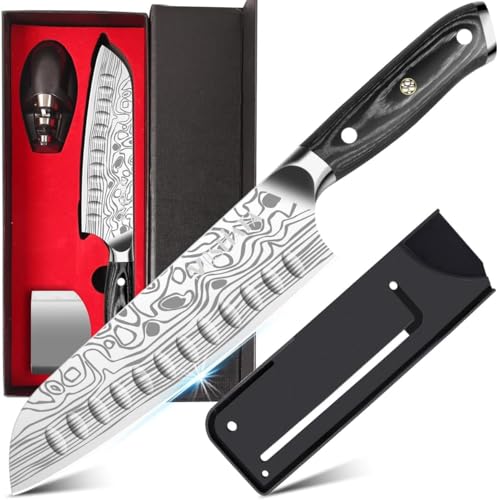
MOSFiATA 7-Inch Forged Santoku Knife
Best for: Vegetable chopping with a sturdy German steel blade
- Blade Material
- German Stainless Steel (what this guide is about)
- Blade Length
- 7 Inch
- Knife Type
- Santoku Knife
- Construction
- Forged
- Edge Angle
- 14-16 degrees per side
- Blade Hardness
- 56 ±1 HRC
View on Amazon: MOSFiATA 7-Inch Forged Santoku Knife Affiliate link
This MOSFiATA santoku knife is forged from German stainless steel with a 7-inch blade. The edge is sharpened to 14-16 degrees per side for precision. It features a full tang construction and a Micarta handle for balance. The 56 HRC hardness offers a practical balance of sharpness and durability. It is a versatile tool for chopping vegetables and daily kitchen tasks.
Pros
- Forged from EN.4116 German stainless steel
- 14-16 degree edge angle per side
- Micarta handle with triple rivets
- Full tang construction for stability
- 56 ±1 HRC blade hardness
Cons
- Heavier at 11.2 ounces than typical Japanese knives
- German steel is softer than high-carbon Japanese options
- Includes only a basic sheath for storage
Good fit if
- You want a balanced German-style santoku
- You prefer a durable full tang build
- You need a versatile vegetable chopping knife
Skip if
- You prefer lightweight Japanese steel knives
- You want a magnetic storage block
- You need a high-carbon stainless blade
Verdict: The MOSFiATA 7 Inch Santoku Knife suits cooks who value a sturdy, full-tang German steel blade with a precise edge angle for vegetable prep. It is a solid, heavy-duty option for daily chopping tasks.
Specifications side by side
| Spec | Imarku 8-Inch Japanese Gyutou Chef Knife | VITUER 4-Inch German Steel Paring Knife 4-Piece Set | Yatoshi 6-Piece Damascus Steel Knife Block Set | Orblue 8-Inch Stainless Steel Bread Knife | Imarku 6-Inch High-Carbon Steel Boning Knife | MOSFiATA 7-Inch Forged Santoku Knife |
|---|---|---|---|---|---|---|
| Blade Length | 8" | 4 Inch | 8 in, 7 in, 5 in, 3.5 in | 8 in | 6 Inch | 7 Inch |
| Knife Type | Gyutou Chef Knife | Paring | Chef, Bread, Santoku, Utility, Paring | Bread | Fillet Knife | Santoku Knife |
| Blade Material | SUS440A stainless steel | German stainless steel (3Cr13MoV) | VG-10 | Stainless steel | German High Carbon Stainless Steel | not stated |
| Construction | not stated | not stated | 67-layer Damascus | not stated | not stated | Forged |
| Edge Type | not stated | not stated | Double-bevel | Serrated | not stated | not stated |
| Edge Angle | not stated | not stated | 16° per side | not stated | not stated | 14-16 degrees per side |
| Blade Hardness | 56-58 HRC | 56±2 HRC | 60-61 Rockwell | not stated | 56 Rockwell | 56 ±1 HRC |
| Handle Material | Pakkawood | PP Plastic | Olive wood | Stainless steel | Pakkawood | Micarta |
| Storage Type | not stated | not stated | Knife Block | not stated | not stated | Sheath |
| Style | Japanese | German | Japanese | not stated | German | German |
| Recommended Use | not stated | Vegetables, Peeling, Fruit | not stated | not stated | Boning, Meat | Vegetables |
| Dimensions | 13 × 1.7 × 0.8 inches | 7.8 × 3.94 × 0.39 inches | 9.5 × 4 × 15 inches | 13 × 0.8 × 1.18 inches | 12.7 × 3.2 × 1.3 inches | 14.1 × 4.7 × 2.08 inches |
| Weight | 6.9 ounces | 5.61 ounces | 7 pounds | not stated | 10.9 ounces | 11.2 ounces |
| Size | 13" | 4 Knives | 6-Piece | 8" | 6 inch Boning Knife | 7" |
| Color | Deep Black | Rainbow | Olive | Ageless Silver | Silver with Brown | Silver 7 " Santoku Knife |
| Model | CF01 | Pk4pc | MO6 | ORB-BRD-KNF-BK-FBA | Imarku | 178mm 三徳刀 |
Frequently asked questions
What is the difference between stainless steel and high-carbon stainless steel?
Stainless steel prioritizes rust resistance and low maintenance, making it durable for daily tasks. High-carbon stainless steel adds more carbon to the alloy, which increases hardness and edge retention. You get a sharper edge that lasts longer, though it requires slightly more care to prevent corrosion compared to standard stainless options.
Does German stainless steel perform differently than Japanese stainless steel?
The primary difference lies in the blade geometry and steel hardness. German styles, like the VITUER set, often feature thicker blades for sturdy chopping and robust construction. Japanese styles, such as the Imarku Gyutou, typically have thinner profiles designed for precision slicing and detailed work, offering a different cutting experience for your specific tasks.
Is Damascus steel better than standard stainless steel for kitchen use?
Damascus steel offers a layered construction that can provide excellent sharpness and edge retention, often using a hard core like VG-10. The Yatoshi set demonstrates this with high-hardness steel for precision cutting. While visually distinct, the performance benefit comes from the core material's hardness rather than the visible layers alone.
Why is blade material important for a bread knife?
The material determines how well the blade resists rust from acidic foods and maintains its serrated edge. Stainless steel, like the Orblue model, provides rust resistance and easy maintenance. This ensures the blade stays durable and sanitary when slicing crusty loaves, prioritizing longevity and hygiene over extreme sharpness for other tasks.
What does high-carbon steel mean for a boning knife?
High-carbon steel allows for a harder, more durable edge suitable for precise work. The Imarku boning knife uses this material to handle dedicated deboning and filleting tasks. You get a blade that holds its shape well during repetitive use, offering ergonomic control and corrosion resistance in a specialized tool for meat preparation.
How does blade material affect the weight and balance of a knife?
Steel density and blade thickness influence the overall weight and balance. A full-tang German Santoku, like the MOSFiATA, uses solid steel construction for a heavy, sturdy feel. This adds stability for vegetable chopping. Thinner Japanese blades often weigh less, offering a lighter touch for detailed slicing tasks without compromising structural integrity.