How to Choose Cleavers: A Complete Buying Guide for 2026
As an Amazon Associate we earn from qualifying purchases. Links on this page are affiliate links.
This cleaver buying guide helps you select the right knife for your kitchen tasks. You will decide between German, Japanese, and stainless steel options based on weight, blade thickness, and material. We evaluated 5 models strictly by their published specifications to ensure an objective comparison. Each product’s dimensions, weight, and steel type determine its performance for chopping bones or slicing vegetables. You can match these specs to your cooking habits without relying on subjective opinions or marketing claims. The guide walks you through key factors like tang construction and blade hardness. These details explain how each knife handles impact and maintains its edge. You will see how a 1.12-pound high-carbon steel cleaver differs from a lighter 11.8-ounce Japanese model. Understanding these differences helps you choose a tool that fits your strength and style. We focused on practical attributes that affect daily use, such as handle ergonomics and blade width. This approach ensures you pick a cleaver that performs reliably for your specific needs.
Our top pick: HOSHANHO 7-Inch Stainless Steel Cleaver.
Key Specs for Choosing a Cleaver
Blade Material and Steel Type
The steel determines how well the blade holds an edge and resists rust. High-carbon steel, like the JANSKA model, offers superior sharpness and edge retention for heavy bone chopping but requires more care to prevent corrosion. Japanese high-carbon stainless steel, found in the Imarku cleaver, balances hardness with easier maintenance. Stainless steel options, such as the Utopia Kitchen or Cuisinart models, are durable and low-maintenance but may not hold a razor edge as long. Damascus steel, seen in the KYOKU cleaver, combines a hard core with a corrosion-resistant outer layer. Choose high-carbon for precision and longevity if you are willing to dry your knife immediately after washing. Select stainless steel for daily, low-maintenance tasks where rust resistance is a priority.
- High-carbon steel for edge retention
- Stainless steel for low maintenance
- Damascus for balanced performance
Blade Thickness and Weight
Thickness and weight impact the force you can apply and the precision of your cuts. Thicker blades, such as the 0.9-inch width of the Utopia Kitchen cleaver or the substantial build of the JANSKA model, provide stability and power for chopping through poultry bones and dense meats. Thinner blades, like the 0.09-inch width of the HOSHANHO cleaver, reduce friction and allow for finer slicing of vegetables and boneless meat. Weight also matters; the JANSKA model weighs 1.12 pounds for heavy-duty tasks, while the Imarku cleaver is lighter at 11.8 ounces for easier handling. Heavier cleavers reduce wrist fatigue during repetitive chopping but require more strength. Lighter cleavers offer better control for delicate prep work.
- Thick blade for bone chopping
- Thin blade for precision slicing
- Weight suitable for your strength
Construction and Tang Type
The construction affects the balance and durability of the knife. A full tang, where the metal extends through the entire handle, provides stability and balance, as seen in the JANSKA and Huusk cleavers. This design prevents the handle from breaking under heavy impact. Partial tangs or hidden tangs may be lighter but less durable for heavy bone work. The KYOKU cleaver features a forged construction with a full tang, ensuring long-term durability. Forged blades are generally stronger and better balanced than stamped blades. Check the product description for mentions of full tang or forged construction if you plan to use the cleaver for tough jobs like splitting ribs or chopping hard squash.
- Full tang for stability
- Forged construction for durability
- Solid handle attachment
Blade Width and Profile
The width of the blade influences how much food you can handle at once and how the knife feels in your hand. A wider blade, like the 5.04-inch width of the Cuisinart cleaver, can scoop up chopped ingredients and provides a larger striking surface for chopping bones. Narrower blades, such as the 2-inch width of the KYOKU cleaver, offer better control for detailed vegetable prep. The height of the blade, often around 3 inches in these models, allows you to crush garlic or herbs with the flat side. Consider the width based on your typical tasks. Wider blades are better for bulk meat prep, while narrower profiles suit precise vegetable work.
- Wide blade for scooping
- Narrow blade for control
- Sufficient height for crushing
Storage and Safety Features
Proper storage protects the sharp edge and keeps your drawers safe. Some cleavers, like the KYOKU model, come with a sheath or guard to cover the blade when not in use. This is essential for high-carbon steel blades that can be extremely sharp. Other models, such as the Uibkor or Huusk cleavers, may not include a sheath, requiring you to buy one separately or store the knife in a block. A sheath prevents accidental cuts and protects the edge from damage. If the product data mentions an included guard or sheath, it adds value and safety. Otherwise, plan to acquire a compatible storage solution to keep the blade secure.
- Included sheath or guard
- Compatible storage block
- Blade cover for safety
Handle Ergonomics and Grip
The handle design affects comfort and control during extended use. Look for ergonomic handles that fit your hand securely, reducing fatigue during repetitive chopping. The Imarku cleaver is noted for its ergonomic comfort, while the KYOKU cleaver features a G10 handle with engraved rivets for a secure grip. The handle material should be durable and resistant to moisture. Wooden handles require more maintenance, while synthetic materials like G10 or plastic are easier to clean. Check for details on handle material and shape. A comfortable handle ensures better control, especially when applying force to chop through tough ingredients like chicken bones or squash.
- Ergonomic shape for comfort
- Secure grip material
- Moisture-resistant handle
Recommended Use and Versatility
Different cleavers are optimized for specific tasks. German-style cleavers, like the JANSKA model, are designed for heavy bone chopping and meat preparation. Japanese-style cleavers, such as the Imarku and HOSHANHO models, focus on precision slicing and vegetable prep. Stainless steel cleavers, including the Utopia Kitchen and Cuisinart models, offer versatility for general kitchen tasks. Consider your primary use. If you frequently chop bones, choose a heavy, thick German-style cleaver. If you prioritize vegetable prep and precision, a Japanese-style cleaver with a thinner blade is better. Some models, like the HOSHANHO, are marketed for both vegetables and meat, offering a middle ground.
- Heavy duty for bones
- Precision for vegetables
- Versatile for general tasks
Types of Kitchen Knives & Sharpeners
German High-Carbon Cleavers
German-style cleavers prioritize heavy-duty performance for tough kitchen tasks. The JANSKA 7-Inch model features a high-carbon steel blade and full tang construction, providing the stability needed for chopping bones. Its 1.12-pound weight and 7-inch blade length offer substantial impact force. This design suits cooks who regularly prepare meat and require a durable, robust tool. The trade-off is that high-carbon steel requires more maintenance to prevent rust, but it delivers superior sharpness for heavy chopping jobs.
Japanese Stainless Cleavers
Japanese cleavers balance hardness and edge retention for precision work. The Imarku 7-Inch model uses high-carbon stainless steel with a 11.8-ounce weight and 3.3-inch blade width. This lighter build allows for better control during daily chopping and mincing tasks. The ergonomic handle enhances comfort for home cooks who prioritize sharpness over raw power. At 12 inches in total length, it offers a comfortable grip. You get excellent edge retention and reduced maintenance needs, though it may not handle heavy bone chopping as aggressively as heavier steel options.
Standard Stainless Cleavers
Standard stainless steel cleavers focus on durability and ease of use. The Utopia Kitchen 7-Inch model weighs 14.1 ounces with a 3.15-inch blade height, making it a sturdy option for bone chopping. Its black stainless finish resists corrosion well, requiring minimal care. This cleaver fits users who want a reliable, no-fuss tool for meat preparation. The 11.6-inch length provides a comfortable handle. While it lacks the premium edge retention of high-carbon steels, its robust construction and standard size make it a practical choice for everyday kitchen durability and heavy-duty tasks.
Precision Vegetable Cleavers
Some cleavers are optimized for precision slicing rather than heavy chopping. The HOSHANHO 7-Inch model features a thin 0.09-inch blade width, allowing for precise vegetable prep and small bone work. Its 1-pound weight offers a balance between control and force. This Japanese steel cleaver suits cooks who value a hard, sharp edge for detailed tasks. The silver finish and 12-inch length provide a sleek look. You gain superior sharpness and control for vegetables, but the thinner blade may not withstand heavy bone chopping as well as thicker, heavier alternatives designed for raw meat processing.
Common Mistakes When Buying Cleavers
Ignoring blade thickness for your tasks
Thick blades split bones but struggle with fine slicing. Thin blades slice well but may chip on hard ingredients. Check the millimeter spec to match your primary use. Select a thickness that balances durability with precision for your specific kitchen routine.
Overlooking handle material and grip
A slippery handle causes accidents during heavy chopping. Look for materials that resist moisture and provide secure traction. Ergonomic shapes reduce hand fatigue. Ensure the handle fits your hand size comfortably to maintain control and safety while using the knife.
Choosing the wrong blade length
A blade that is too long lacks control for small tasks. One that is too short lacks leverage for large vegetables. Measure your typical ingredient sizes. Select a length that allows you to manage the food securely without risking damage to your workspace.
Neglecting maintenance requirements
High-carbon steel rusts quickly if not dried immediately. Stainless steel resists corrosion but may need frequent sharpening. Read the care instructions carefully. Choose a steel type that aligns with your willingness to perform regular cleaning and oiling to preserve the blade.
Quick picks
| # | Product | Best for | Price |
|---|---|---|---|
| 1 | HOSHANHO 7-Inch Stainless Steel Cleaver | Precision chopping and vegetable prep | Check price of HOSHANHO 7-Inch Stainless Steel Cleaver on Amazon |
| 4 | Mueller 7-Inch High-Carbon Steel Cleaver | Heavy bone chopping and meat preparation | Check price of Mueller 7-Inch High-Carbon Steel Cleaver on Amazon |
| 6 | imarku 7-Inch High-Carbon Steel Cleaver | Daily chopping and mincing tasks | Check price of imarku 7-Inch High-Carbon Steel Cleaver on Amazon |
| 7 | KYOKU Shogun Series 7" Forged Damascus Cleaver | Precision slicing of vegetables and boneless meat | Check price of KYOKU Shogun Series 7" Forged Damascus Cleaver on Amazon |
| 8 | Utopia Kitchen 7-Inch Stainless Steel Cleaver | home cooks chopping bones | Check price of Utopia Kitchen 7-Inch Stainless Steel Cleaver on Amazon |
Our 5 picks

HOSHANHO 7-Inch Stainless Steel Cleaver
Best for: Precision chopping and vegetable prep
- Blade Length
- 7 in
- Intended Use
- Handling fish, cutting chicken, veg
- Blade Steel
- 10Cr15CoMoV
- Construction
- Forged
- Hardness
- 58+2 HRC
- Blade Thickness
- 2.3 mm
This HOSHANHO cleaver uses 10Cr15CoMoV Japanese stainless steel forged into a 7-inch blade. It holds a hardness of 58+2 HRC and features a 2.3 mm blade thickness. The 15-degree edge angle allows for precise cuts through vegetables, fish, and chicken. Weighing 1 pound, it offers a balanced feel for daily kitchen tasks. The ergonomic handle reduces hand pressure during prolonged use.
Pros
- 10Cr15CoMoV Japanese stainless steel construction
- 58+2 HRC hardness for edge retention
- 15-degree edge angle for precision
- 2.3 mm blade thickness for durability
- Forged build quality
Cons
- Heavier at 1 pound compared to lighter alternatives
- Requires hand washing to maintain condition
- Silver finish shows fingerprints easily
Good fit if
- You want high hardness for sharpness
- You prefer Japanese steel formulations
- You need a versatile vegetable and meat tool
Skip if
- You prefer ultra-lightweight knives
- You want dishwasher-safe convenience
- You need a smaller 6-inch blade
Verdict: HOSHANHO 7-Inch Japanese Steel Cleaver suits cooks who prioritize a hard, precise edge from Japanese steel over lightweight handling. It is a solid choice for chopping vegetables and small bones.

Mueller 7-Inch High-Carbon Steel Cleaver
Best for: Heavy bone chopping and meat preparation
- Blade Length
- 7 in
- Intended Use
- heavy bone work, chopping, slicing
- Blade Steel
- German stainless steel
- Handle Material
- stainless steel
- Construction
- precision-forged, full tang
- Blade Material
- High-Carbon Steel
This JANSKA cleaver features a 7-inch blade forged from high-carbon German stainless steel. It has a full tang and a seamless stainless steel handle. The edge is sharpened to an 18-degree double-bevel angle. Weighing 1.12 pounds, it balances well for heavy bone work. The wide blade acts as a bench scraper. It suits cooks who need a durable, multi-purpose tool for chopping meat and vegetables.
Pros
- Forged from high-carbon German stainless steel
- Full tang construction for durability
- 18-degree double-bevel edge for sharpness
- Seamless stainless steel handle is dishwasher safe
Cons
- Heavier build at 1.12 pounds may cause fatigue
- Stainless steel handle may feel less comfortable than wood
- Single blade size limits precision for small tasks
Good fit if
- You need a heavy-duty knife for bone work
- You prefer a full tang construction for balance
- You want a dishwasher-safe stainless steel handle
Skip if
- You prefer lightweight knives for delicate tasks
- You want a wooden handle for traditional feel
- You need multiple blade sizes in one purchase
Verdict: JANSKA 7-Inch German Steel Cleaver is a solid choice for those who chop bones and meat regularly. Its full tang and heavy build provide the stability needed for tough jobs.

imarku 7-Inch High-Carbon Steel Cleaver
Best for: Daily chopping and mincing tasks
- Blade Length
- 7 in
- Intended Use
- Chopping, mincing, slicing, boning
- Blade Steel
- Japanese high carbon stainless steel
- Handle Material
- Pakkawood
- Construction
- Forged
- Hardness
- 57+1 HRC
This 7-inch cleaver is forged from Japanese high carbon stainless steel with a hardness of 57+1 HRC. The blade is hand-sharpened to a 15-degree angle and measures 2.4 mm thick. You get a lightweight design at 11.8 ounces with an FSC certified Pakkawood handle. It suits those who want precision cutting for daily tasks like chopping and mincing.
Pros
- Forged Japanese high carbon stainless steel blade
- 57+1 HRC hardness for edge retention
- 15-degree double-sided sharpening angle
- FSC certified Pakkawood handle
Cons
- Heavier than typical Japanese vegetable cleavers
- No bolster for finger protection
- Only one size option available
Good fit if
- You prefer a 7-inch blade for versatility
- You want a knife that is easy to resharpen
- You need a corrosion-resistant steel for daily use
Skip if
- You require a thinner blade for delicate slicing
- You need a right-hand specific handle
- You prefer a German-style high carbon steel
Verdict: Imarku 7-Inch Japanese Cleaver offers a balanced blend of hardness and sharpness for home cooks. It fits users who prioritize edge retention and ergonomic comfort over ultra-lightweight performance.
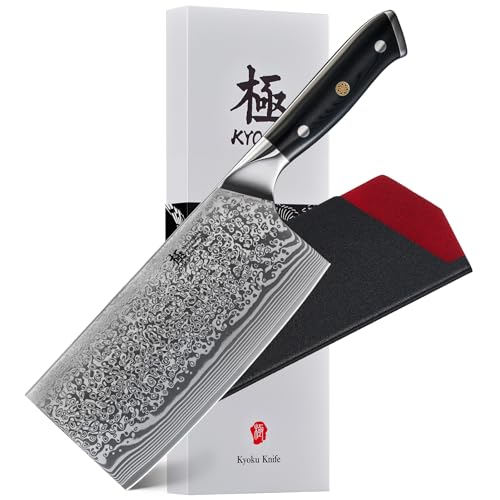
KYOKU Shogun Series 7" Forged Damascus Cleaver
Best for: Precision slicing of vegetables and boneless meat
- Blade Length
- 7 in
- Intended Use
- Vegetable slicing, meat slicing
- Blade Steel
- Japanese VG-10 Damascus
- Handle Material
- G10
- Construction
- Forged, full tang
- Hardness
- 58-60 HRC
View on Amazon: KYOKU Shogun Series 7" Forged Damascus Cleaver
This KYOKU vegetable cleaver features a 7-inch Japanese VG10 Damascus steel core with a hardness of 58-60 HRC. It uses a forged full tang construction and a triple-riveted G10 handle for durability. The blade is cryogenically treated and sharpened to 8-12 degrees. It includes a protective sheath and case. This tool suits users who need precise slicing for vegetables and meat with high edge retention.
Pros
- VG10 Japanese Damascus steel core for superior sharpness
- 58-60 HRC hardness rating for edge retention
- Triple-riveted G10 handle resists moisture and heat
- Includes protective sheath and storage case
Cons
- Lightweight at 0.35 ounces may feel less substantial than heavier cleavers
- Intended primarily for vegetables and meat slicing rather than heavy bone chopping
- G10 handle material may feel less traditional than wood or micarta
Good fit if
- You prefer Japanese-style steel for a finer edge
- You need a cleaver mainly for vegetables and boneless meat
- You value included protective storage for blade care
Skip if
- You require a heavy-duty tool for chopping through bones
- You prefer a traditional wooden handle feel
- You want a blade significantly wider than 2 inches
Verdict: The KYOKU 7" VG10 Damascus Vegetable Cleaver delivers precision slicing for vegetables and meat with a hard VG10 core. It fits users who prioritize sharpness and edge retention over heavy chopping power.

Utopia Kitchen 7-Inch Stainless Steel Cleaver
Best for: home cooks chopping bones
- Blade Length
- 7 in
- Intended Use
- Bone chopping
- Blade Steel
- Stainless steel
- Color
- Black
- Recommended Use
- Meat
- Dimensions
- 11.6 × 0.9 × 3.15 inches
View on Amazon: Utopia Kitchen 7-Inch Stainless Steel Cleaver
This Utopia Kitchen cleaver features a 7-inch blade made from stainless steel. It weighs 14.1 ounces and measures 11.6 inches in total length. The black handle provides an ergonomic grip for controlled use. You can use this tool for chopping bones and preparing meat. Its durable construction supports heavy-duty kitchen tasks. It suits cooks who need a versatile knife for both vegetables and meat.
Pros
- 7-inch stainless steel blade
- 14.1-ounce weight for stability
- Ergonomic black handle design
- Suitable for bone chopping
Cons
- Standard stainless steel lacks high-carbon edge retention
- No specific blade hardness rating provided
- Heavier build may fatigue some users
Good fit if
- You need a durable knife for chopping bones
- You prefer a standard 7-inch blade size
- You want a versatile tool for meat and vegetables
Skip if
- You require high-carbon stainless steel for superior sharpness
- You prefer a lighter knife for precision work
- You need a Japanese-style VG steel blade
Verdict: Utopia Kitchen 7-Inch Meat Cleaver offers a sturdy option for bone chopping. It fits users who prioritize durability and a standard size over premium steel characteristics.
Specifications side by side
| Spec | HOSHANHO 7-Inch Stainless Steel Cleaver | Mueller 7-Inch High-Carbon Steel Cleaver | imarku 7-Inch High-Carbon Steel Cleaver | KYOKU Shogun Series 7" Forged Damascus Cleaver | Utopia Kitchen 7-Inch Stainless Steel Cleaver |
|---|---|---|---|---|---|
| Blade Length | 7 in | 7 in | 7 in | 7 in | 7 in |
| Intended Use | Handling fish, cutting chicken, veg | heavy bone work, chopping, slicing | Chopping, mincing, slicing, boning | Vegetable slicing, meat slicing | Bone chopping |
| Blade Steel | 10Cr15CoMoV | German stainless steel | Japanese high carbon stainless steel | Japanese VG-10 Damascus | Stainless steel |
| Handle Material | not specified | stainless steel | Pakkawood | G10 | not specified |
| Construction | Forged | precision-forged, full tang | Forged | Forged, full tang | not specified |
| Hardness | 58+2 HRC | not specified | 57+1 HRC | 58-60 HRC | not specified |
| Blade Thickness | 2.3 mm | not specified | 2.4 mm | not specified | not specified |
| Included Storage | not specified | not specified | not specified | Sheath and case | not specified |
| Blade Material | not specified | High-Carbon Steel | High-Carbon Stainless Steel | Damascus Steel | Stainless Steel |
| Storage Type | not specified | not specified | not specified | Sheath | not specified |
| Color | Silver | Black | Light Black | Life-time Warranty, Japanese VG10 Steel Core, Full Tang, G10 Handle with Engraved Rivet & Mosaic Pin, Included Guard, Ice Tempered & Heat Treated, Superior Sharpness, Ergonomic handle & well-balanced design | Black |
| Style | not specified | German | Japanese | Japanese | not specified |
| Recommended Use | Vegetables, Meat | Meat | not specified | Vegetables, Meat | Meat |
| Dimensions | 12 × 0.09 × 3.15 inches | not specified | 12 × 3.3 × 0.8 inches | 14.6 × 2 × 1 inches | 11.6 × 0.9 × 3.15 inches |
| Weight | 1 pounds | 1.12 pounds | 11.8 ounces | 0.35 ounces | 14.1 ounces |
| Size | 7" | 7" | 7" | 7" | 7" |
| Model | 7 inch Cleaver Knife | SS-77 | I-KC0009 | not specified | UK63C |
Frequently asked questions
What is the difference between a Chinese and Japanese cleaver?
Chinese cleavers, often called Chinese chef knives, typically feature a rectangular blade with a full tang and heavier build for chopping bones and meat. Japanese cleavers, or nakiri, usually have a thinner, lighter blade designed for precise vegetable slicing. Look for high-carbon steel in Japanese models for sharper edges, while German-style cleavers prioritize durability for heavy tasks.
How heavy should a meat cleaver be?
Meat cleavers generally weigh between 11 and 18 ounces to provide the momentum needed for chopping through bone. Heavier models, such as the Utopia Kitchen cleaver at 14.1 ounces, offer stability for tough jobs. Lighter options, like the Imarku 7.5-Inch at 12.3 ounces, suit cooks who prefer less wrist fatigue during extended prep sessions.
Is high-carbon steel better than stainless steel for cleavers?
High-carbon steel holds a sharper edge longer and is easier to sharpen, making it ideal for precise chopping. It requires regular cleaning and oiling to prevent rust. Stainless steel, like the HOSHANHO model, offers better corrosion resistance and lower maintenance, though it may not achieve the same extreme sharpness as high-carbon variants.
What blade thickness is best for chopping vegetables?
Thinner blades slice through vegetables cleanly without crushing them. The HOSHANHO cleaver features a 0.09-inch width, suitable for precision chopping. Thicker blades, such as the JANSKA model, are better for splitting bones. Choose a thinner profile if your primary task involves mincing herbs or slicing produce rather than breaking down meat.
Do I need a full tang cleaver?
A full tang extends the metal through the entire handle, providing balance and durability. This construction is common in heavy-duty cleavers like the JANSKA and HexClad models. It prevents the handle from breaking under stress during bone chopping. For lighter vegetable prep, a partial tang may suffice, but full tang offers superior stability.
What is the ideal blade length for a home cleaver?
Most home cleavers range from 6.3 to 7.5 inches. A 7-inch blade, found in models like the HOSHANHO and Imarku 7-Inch, offers a versatile balance for various tasks. Longer blades, such as the 7.5-inch Imarku, provide more surface area for rocking cuts. Shorter blades, like the 6.3-inch Imarku, offer better control for small spaces.
How do I maintain a Japanese steel cleaver?
Japanese steel, often VG10 or high-carbon, requires hand washing and immediate drying to prevent corrosion. Store the knife in a sheath or block to protect the hard edge. Regular honing keeps the edge aligned, while professional sharpening maintains the acute angle. Avoid cutting hard bones unless the cleaver is designed for heavy use.
Can a cleaver replace a chef's knife?
A cleaver can handle many tasks, but its weight and shape limit versatility. It excels at chopping and splitting but struggles with fine slicing or rocking cuts. Use a cleaver for bone-in meats and dense vegetables. Keep a lighter chef's knife for general prep. The Imarku 7-Inch offers a blend, but specialization yields better results.