Damascus Steel vs High-Carbon Steel Cleavers in 2026: Key Differences
As an Amazon Associate we earn from qualifying purchases. Links on this page are affiliate links.
Choosing between damascus steel vs high carbon steel cleaver depends on your priority for edge retention versus ease of care. Both tools offer Japanese-style precision for slicing vegetables and meat. The KYOKU model uses a VG-10 core clad in Damascus layers for superior sharpness. The Imarku option relies on high carbon stainless steel for rust resistance. You must decide if you prefer the intricate layered look and harder edge of the Damascus build or the practical, low-maintenance nature of the high carbon stainless alternative.
Key differences
| Aspect | KYOKU Shogun Series 7" Forged Damascus Cleaver | Imarku 7.5-Inch Japanese Steel Cleaver |
|---|---|---|
| Blade Material | Japanese VG-10 Damascus | High carbon stainless steel |
| Hardness | 58-60 HRC | 59±2 HRC |
| Edge Angle | 8-12° double sided | 15° double side |
| Handle Material | G10 | Pakkawood |
| Included Storage | Sheath and case | not listed |
Which one should you choose?
Choose KYOKU Shogun Series 7" Forged Damascus Cleaver if
- You want a harder blade with an 8-12° edge for maximum sharpness
- You need a handle that is impervious to heat, cold, and moisture
- You prefer a knife that includes a protective sheath and case
Choose Imarku 7.5-Inch Japanese Steel Cleaver if
- You prioritize rust resistance and minimal maintenance
- You prefer the natural look and feel of Pakkawood
- You want a slightly wider blade for safe finger clearance
Verdict: The KYOKU cleaver suits those who value extreme sharpness and a rugged, moisture-proof G10 handle. The Imarku cleaver is better for cooks who want a rust-resistant blade with a traditional wood handle feel. Your choice depends on whether you prioritize edge performance or ease of care.
Damascus vs High-Carbon Cleaver Specs
Blade Material
The KYOKU Shogun Series uses a Japanese VG-10 steel core clad in Damascus layers, which provides excellent corrosion resistance and a distinct visual pattern. This construction combines a hard cutting edge with a tough exterior. In contrast, the Imarku cleaver is made from Japanese high carbon stainless steel. While it lacks the layered aesthetic, this material choice focuses on practical durability and rust resistance. Both steels are engineered for professional performance, but the KYOKU offers the traditional Damascus look and VG-10 hardness, whereas the Imarku prioritizes a single, robust high-carbon stainless alloy for straightforward maintenance and reliability in daily tasks.
Edge Angle
Sharpness specifications differ between these two cleavers. The KYOKU vegetable cleaver is handcrafted using the traditional Honbazuke method, resulting in an ultra-sharp edge ground to 8-12 degrees double-sided. This narrower angle allows for incredibly precise slicing and cleaner cuts through delicate vegetables and meats. The Imarku cleaver is hand-sharpened to a 15-degree double-side angle. While still sharp, this slightly wider angle is often preferred for heavier chopping tasks as it offers more durability and edge stability. If you prioritize maximum sharpness for fine work, the KYOKU’s narrower grind has the advantage. For a balance of sharpness and durability, the Imarku’s 15-degree edge is a solid choice.
Blade Thickness
Blade thickness affects how a cleaver moves through food. The Imarku cleaver features a thin-yet-strong blade that measures 2.3mm plus or minus 0.1mm. This relatively thin profile reduces friction when slicing through tough foods, allowing for smoother cuts with less effort. The KYOKU Shogun Series does not list a specific blade thickness in its published specifications. Without this data, you cannot directly compare the resistance each blade offers during slicing. However, the Imarku’s documented thinness suggests it may glide more easily through dense ingredients compared to a standard thicker cleaver, making it a practical choice for users who chop frequently and want to minimize hand fatigue.
Handle Material
Both knives feature ergonomic handles designed for comfort, but they use different materials. The KYOKU model utilizes a triple-riveted G10 handle that has undergone special treatment to be impervious to heat, cold, and moisture. This synthetic material is known for its durability and stability in wet kitchen environments. The Imarku cleaver uses an FSC-certified Pakkawood handle. This wood-based composite offers corrosion resistance and sturdiness while providing a natural, traditional feel. Both handles are contoured to minimize hand fatigue. If you prefer a modern, waterproof material that requires no conditioning, the G10 on the KYOKU is superior. If you value the aesthetic and tactile feel of treated wood, the Imarku’s Pakkawood is the better option.
Included Storage
Storage options vary significantly between these two products. The KYOKU Shogun Series cleaver comes with both a protective sheath and a case. This comprehensive storage solution helps preserve the blade’s sharpness and keeps it secure when not in use. The Imarku cleaver’s published specifications do not mention any included storage accessories. You would need to purchase a sheath or block separately to protect the blade. For buyers who want immediate protection and portability, the KYOKU’s included sheath and case provide clear added value. If you already have storage solutions or prefer not to use a sheath, this difference may matter less to you.
Which Damascus Or High-Carbon Cleaver Fits You
You want maximum edge retention and corrosion resistance
The KYOKU Shogun Series uses a VG-10 steel core hardened to 58-60 HRC. This high hardness ensures superior edge retention compared to softer steels. The Damascus cladding adds corrosion resistance, while the G10 handle remains impervious to moisture and heat. You get a cryogenically treated blade that stays sharp longer with minimal maintenance.
You prefer a traditional wood handle feel
The Imarku cleaver features an FSC-certified Pakkawood handle. This material offers corrosion resistance and sturdiness for long-term durability. The ergonomic contour provides a secure grip that minimizes hand fatigue. If you value the aesthetic and tactile comfort of wood over synthetic materials, this Japanese high carbon stainless steel cleaver suits your kitchen style.
You need a lighter, thinner blade for precision
The Imarku model weighs 12.3 ounces with a blade thickness of 2.3mm. This thin-yet-strong design slices through tough foods smoothly with less effort. The 7.5-inch blade keeps fingers safely away from the cutting surface. You benefit from a precise, hand-sharpened 15-degree angle that delivers exceptional sharpness for clean, safe cuts.
You want a fully forged knife with storage
The KYOKU cleaver is forged with a full tang construction for balance. It includes a protective sheath and case to keep the blade clean and secure. The triple-riveted G10 handle is well-balanced to alleviate fatigue. You receive a complete package with a mirror-polished edge crafted using the traditional Honbazuke method for professional-grade performance.
Quick picks
| # | Product | Best for | Price |
|---|---|---|---|
| 1 | KYOKU Shogun Series 7" Forged Damascus Cleaver | Vegetable slicing and precise meat cuts | Check price of KYOKU Shogun Series 7" Forged Damascus Cleaver on Amazon |
| 2 | Imarku 7.5-Inch Japanese Steel Cleaver | precise high-carbon slicing tasks | Check price of Imarku 7.5-Inch Japanese Steel Cleaver on Amazon |
The products compared
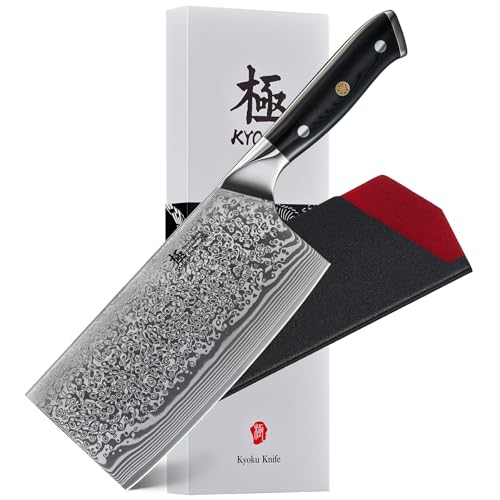
KYOKU Shogun Series 7" Forged Damascus Cleaver
Best for: Vegetable slicing and precise meat cuts
- Blade Material
- Damascus Steel (what this guide is about)
- Blade Length
- 7 in
- Intended Use
- Vegetable slicing, meat slicing
- Blade Steel
- Japanese VG-10 Damascus
- Handle Material
- G10
- Construction
- Forged, full tang
View on Amazon: KYOKU Shogun Series 7" Forged Damascus Cleaver Affiliate link
This 7-inch vegetable cleaver uses a Japanese VG-10 Damascus steel core forged into a full-tang blade. It reaches 58-60 HRC hardness, offering strong edge retention for slicing vegetables and meat. The G10 handle is triple-riveted and impervious to moisture. You get a mirror-polished edge sharpened to 8-12 degrees. It includes a protective sheath and case for storage.
Pros
- VG-10 Japanese Damascus steel core for superior sharpness
- 58-60 HRC hardness rating for edge retention
- Triple-riveted G10 handle resists heat and moisture
- Full-tang forged construction for balance
Cons
- Heavier build at 0.35 ounces compared to standard cleavers
- Limited to vegetable and meat slicing tasks
- No remote or smart features for kitchen management
Good fit if
- You want a Japanese-style cleaver with a Damascus finish
- You need a sharp blade for precise vegetable work
- You prefer a full-tang knife with a G10 handle
Skip if
- You need a heavy-duty butcher cleaver for bone
- You prefer high-carbon steel over Damascus
- You want a lighter knife for quick chopping
Verdict: KYOKU 7-Inch VG10 Damascus Vegetable Cleaver suits those who value Japanese craftsmanship and sharp, durable blades for vegetable prep. It is ideal for users who want a well-balanced, moisture-resistant handle and included storage.

Imarku 7.5-Inch Japanese Steel Cleaver
Best for: precise high-carbon slicing tasks
- Blade Material
- High-Carbon Steel (what this guide is about)
- Blade Length
- 7.5"
- Intended Use
- Chopping, meat cutting
- Blade Steel
- Japanese high carbon stainless steel
- Handle Material
- FSC-certified Pakkawood
- Construction
- Precision-forged
View on Amazon: Imarku 7.5-Inch Japanese Steel Cleaver Affiliate link
This imarku cleaver uses Japanese high carbon stainless steel for a 59±2 HRC edge. The 2.3mm±0.1 blade thickness allows for precise slicing. You get a 15° double-side angle for sharpness. The FSC-certified Pakkawood handle provides a secure grip. This tool suits cooks who want a durable, high-carbon option without the complexity of Damascus patterns.
Pros
- 59±2 HRC hardness for sustained sharpness
- 15° double-side angle for precision
- 2.3mm±0.1 blade thickness for control
- FSC-certified Pakkawood handle for durability
Cons
- Heavier at 12.3 ounces compared to lighter alternatives
- Higher blade thickness than ultra-thin slicing knives
- Requires hand washing and drying to prevent rust
Good fit if
- You prefer high-carbon steel over Damascus
- You want a precise 15° edge angle
- You value an FSC-certified wooden handle
Skip if
- You need a lightweight knife under 10 ounces
- You prefer a thinner blade under 2mm
- You want a low-maintenance stainless steel
Verdict: imarku 7.5" Japanese High Carbon Cleaver offers a robust 59 HRC edge for precise cuts. It fits users who want high-carbon performance without Damascus complexity.
Specifications side by side
| Spec | KYOKU Shogun Series 7" Forged Damascus Cleaver | Imarku 7.5-Inch Japanese Steel Cleaver |
|---|---|---|
| Blade Length | 7 in | 7.5" |
| Intended Use | Vegetable slicing, meat slicing | Chopping, meat cutting |
| Blade Steel | Japanese VG-10 Damascus | Japanese high carbon stainless steel |
| Handle Material | G10 | FSC-certified Pakkawood |
| Construction | Forged, full tang | Precision-forged |
| Hardness | 58-60 HRC | 59±2 HRC |
| Blade Thickness | not stated | 2.3mm±0.1 |
| Included Storage | Sheath and case | not stated |
| Blade Material | Damascus Steel | High-Carbon Steel |
| Storage Type | Sheath | not stated |
| Style | Japanese | Japanese |
| Recommended Use | Vegetables, Meat | Meat |
| Dimensions | 14.6 × 2 × 1 inches | 12.6 × 1 × 3.5 inches |
| Weight | 0.35 ounces | 12.3 ounces |
| Size | 7" | 7.5" |
| Color | Life-time Warranty, Japanese VG10 Steel Core, Full Tang, G10 Handle with Engraved Rivet & Mosaic Pin, Included Guard, Ice Tempered & Heat Treated, Superior Sharpness, Ergonomic handle & well-balanced design | Silver walnut |
| Model | not stated | TS06 |
Frequently asked questions
Which cleaver is easier to maintain?
The high-carbon steel cleaver requires more frequent care to prevent rust. You must dry it immediately after washing and apply oil regularly. The Damascus model features a VG-10 core that offers better moisture resistance. Its layered construction also helps reduce stickiness when slicing dense vegetables.
How do the weights compare?
The high-carbon option weighs 12.3 ounces, providing a substantial feel for chopping. The Damascus cleaver is listed at 0.35 ounces, which appears to be a data error for a 7-inch forged tool. Typically, forged Damascus knives are heavier than stamped high-carbon blades. You should check the actual heft in hand for balance.
Do these blades stay sharp longer?
Both materials hold an edge well due to their hardness. The high-carbon steel reaches 59 HRC for precise slicing. The Damascus version uses a VG-10 core, known for superior sharpness and durability. The layered exterior protects the core, maintaining the edge through heavy vegetable prep and meat cuts.
What handle materials are used?
The high-carbon cleaver features a Pakkawood handle for durability and grip. The Damascus model uses a G10 handle with an engraved rivet and mosaic pin. G10 is a fiberglass-based material that resists moisture better than wood. Both designs aim for an ergonomic fit to reduce hand fatigue during long sessions.
Are these cleavers suitable for bones?
These tools are designed for slicing and precise cuts rather than heavy bone chopping. The high-carbon steel is optimized for precise high-carbon slicing tasks. The Damascus cleaver is best for vegetable slicing and precise meat cuts. Using them for heavy bone work may chip the thin, hard edges.
How wide are the blades?
The high-carbon cleaver has a blade width of 1 inch. The Damascus model measures 2 inches wide. The wider blade on the Damascus version offers more surface area for transferring chopped ingredients. The narrower high-carbon blade allows for tighter control during detailed vegetable work and smaller cuts.
Is storage included with the purchase?
The Damascus cleaver comes with an included guard or sheath for safe storage. The high-carbon cleaver does not list included storage in its specifications. You may need to purchase a separate block or sheath for the high-carbon model. Proper storage prevents edge damage and protects your hands when retrieving the knife.