Looking Beyond the imarku Santoku imarku 7-Inch High-Carbon Santoku? 6 Alternatives Worth a Look
As an Amazon Associate we earn from qualifying purchases. Links on this page are affiliate links.
You might be searching for imarku santoku knife 7 inch sharp alternatives to find a blade that better fits your specific kitchen workflow. The original imarku 7-Inch High-Carbon Santoku Knife offers a sturdy build with a 15-18 degree edge angle. Its Japanese high carbon stainless steel resists rust and corrosion, while the hollow edge design helps prevent food from sticking. The Pakkawood handle provides a secure grip for daily chopping and slicing tasks. This combination makes it a reliable choice for general prep work.
However, you may prefer a different size, handle material, or steel type. Some cooks need an 8-inch blade for larger vegetables, while others prioritize a harder steel edge for precision. The alternatives listed here were chosen because their specs overlap with the original. They share key features like Japanese style construction or high-carbon steel composition. This list includes 6 options that vary in weight, blade length, and edge geometry. You can compare these specifications to determine which knife aligns with your cooking habits and ergonomic preferences.
Comparing the top alternatives
Imarku 8-Inch Japanese Chef Knife
This Imarku model swaps the Santoku profile for an 8-inch chef knife shape. It keeps the high-carbon steel and Pakka handle but increases blade length to 8 inches. The weight drops slightly to 6.56 ounces, making it lighter than the 6.88-ounce original. You get a versatile blade for general chopping rather than the specialized slicing of a Santoku. Choose this if you prefer a standard chef knife geometry for broader kitchen tasks while staying within the same brand ecosystem.
HOSHANHO 8-Inch Japanese High-Carbon Chef Knife
The HOSHANHO 8-inch Chef Knife uses pure high-carbon steel instead of the stainless variant found in the imarku. It weighs significantly more at 12.3 ounces, offering a heavier feel than the 6.88-ounce original. The blade is 8 inches long, providing more cutting surface for larger ingredients. You trade rust resistance for a potentially harder edge that requires diligent maintenance. This option suits cooks who prioritize traditional steel performance and do not mind the extra weight and upkeep.
HOSHANHO 7-Inch Flexible Fillet Knife
This HOSHANHO 7-inch Fillet Knife is designed for precision fish work rather than general vegetable prep. It features a flexible blade, which the rigid imarku Santoku lacks. The weight is 10.6 ounces, heavier than the original. You give up versatility for specialized boning and filleting capabilities. The silver finish and Japanese style match the aesthetic but the function is entirely different. Pick this if your primary need is preparing fish and you want a blade that bends to follow bone structures.
HOSHANHO 7-Inch Japanese Santoku Knife
The HOSHANHO 7-inch Santoku shares the same blade length as the imarku but weighs 12.3 ounces, nearly double the original’s 6.88 ounces. It uses a traditional wooden handle instead of Pakkawood. The steel is described as hard and precise, suggesting a higher hardness rating than the imarku’s standard high-carbon stainless. You get a heavier, more traditional tool that may hold an edge longer but requires more effort to wield. Choose this if you prefer the balance and feel of a heavier, wood-handled Japanese knife.
HOSHANHO 7-Inch Japanese Nakiri Knife
This HOSHANHO 7-inch Nakiri Knife features a rectangular blade shape, differing from the imarku’s curved Santoku edge. It weighs 12.3 ounces and includes a 60 HRC hardness rating, which is not specified for the imarku. The 15-degree edge angle is sharper than the imarku’s 15-18 degree range. It is optimized for vertical chopping of vegetables. Select this if you do heavy vegetable prep and want a flat edge for precise dicing and slicing without the rockering motion of a Santoku.
SHAN ZU 8-Inch Damascus Chef Knife
The SHAN ZU 8-inch Damascus Chef Knife uses 67-layer forged steel with a 62 HRC hardness rating. It is an 8-inch blade, longer than the imarku’s 7-inch model. The weight is 9.17 ounces, heavier than the original. The Damascus pattern offers a different aesthetic and potentially better corrosion resistance through layering. You get a robust chef knife profile rather than a Santoku. Choose this if you want a highly durable, high-hardness blade for heavy-duty tasks and prefer the visual appeal of Damascus steel.
Quick picks
Our 7 picks
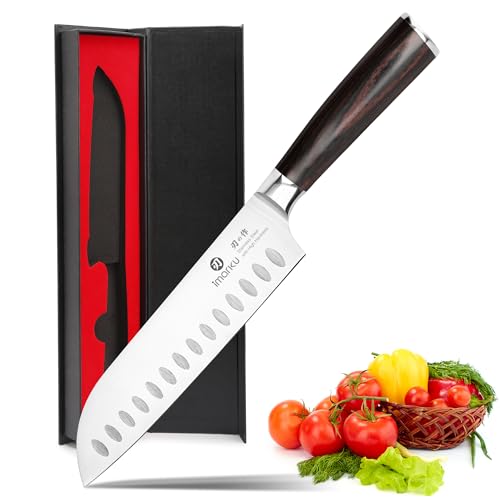
imarku 7-Inch High-Carbon Santoku Knife
Best for: daily chopping and slicing tasks
- Blade Length
- 7"
- Knife Type
- Santoku Knife
- Blade Material
- Japanese high carbon stainless
- Edge Type
- Hollow edge
- Edge Angle
- 15-18° per side
- Handle Material
- Pakkawood
View on Amazon: imarku 7-Inch High-Carbon Santoku Knife Affiliate link
This 7-inch santoku knife uses Japanese high-carbon stainless steel for rust resistance and durability. The blade features a 15-18 degree edge angle and a hollow-edge design to reduce friction and prevent food from sticking. Weighing 6.88 ounces, it balances a Pakkawood handle with a silver blade. It suits home cooks and professionals needing a versatile tool for chopping, slicing, and mincing vegetables and meats.
Pros
- Japanese high-carbon stainless steel resists rust and corrosion
- 15-18 degree hand-polished edge angle for sharpness
- Hollow-edge scalloped design reduces food sticking
- Pakkawood handle offers a secure and stable grip
Cons
- Heavier at 6.88 ounces compared to lighter steel options
- Blade thickness is 2.5mm, which may feel substantial for delicate tasks
- Limited color options beyond brown and silver tones
Good fit if
- You want a versatile knife for daily chopping and slicing
- You prefer a traditional Japanese-style santoku blade
- You value rust-resistant high-carbon stainless steel construction
Skip if
- You need a lightweight knife under 6 ounces
- You prefer a blade thinner than 2.5mm for precision work
- You are looking for a non-stick coated blade
Verdict: imarku 7-Inch High-Carbon Santoku Knife delivers a sturdy build with a sharp 15-18 degree edge. It fits users who prioritize rust resistance and a secure Pakkawood handle for heavy daily kitchen tasks.

Imarku 8-Inch Japanese Chef Knife
Best for: Multipurpose chopping and slicing tasks
- Blade Length
- 8"
- Knife Type
- Chef's Knife
- Blade Material
- High-carbon stainless steel
- Blade Hardness
- 56-58 HRC
- Handle Material
- Pakka
- Style
- Japanese
View on Amazon: Imarku 8-Inch Japanese Chef Knife Affiliate link
This imarku chef knife features an 8-inch blade made from high-carbon stainless steel. The blade hardness reaches 56-58 HRC, offering greater durability than standard options. It uses a Pakka handle for comfort during extended use. The 6.56-ounce weight provides a balanced feel. This tool suits cooks who need a multipurpose kitchen knife for chopping, dicing, and slicing meat.
Pros
- High-carbon stainless steel blade with 0.6-0.75% carbon content
- 56-58 HRC blade hardness for improved sturdiness
- Ergonomic Pakka handle made from FSC-Certified wood
- 16-18% chrome content for corrosion resistance
Cons
- 8-inch blade length exceeds the 7-inch Santoku size
- 6.56-ounce weight is heavier than typical Santoku knives
- 56-58 HRC hardness is lower than premium Japanese steel
Good fit if
- You prefer a standard 8-inch chef knife over a Santoku
- You want a multipurpose tool for chopping and slicing meat
- You value a Pakka handle for comfort and stability
Skip if
- You strictly need a 7-inch Santoku blade
- You prefer lighter knives under 6 ounces
- You require ultra-hard steel above 58 HRC
Verdict: The imarku 8-Inch High-Carbon Chef Knife delivers a robust build with high-carbon steel and a comfortable Pakka handle. It fits cooks who want a versatile, durable chef knife rather than a specialized Santoku.

HOSHANHO 8-Inch Japanese High-Carbon Chef Knife
Best for: Users wanting hard steel and wood handles
- Blade Length
- 8 inch
- Knife Type
- Chef's Knife
- Blade Material
- 10Cr15CoMoV
- Edge Angle
- 13 degree
- Blade Hardness
- up to 60 HRC
- Handle Material
- Wood
View on Amazon: HOSHANHO 8-Inch Japanese High-Carbon Chef Knife Affiliate link
This HOSHANHO chef knife uses 10Cr15CoMoV high-carbon steel for a hard, sharp edge. The blade reaches 60 HRC hardness and is sharpened to 13 degrees per side. It features a wood handle with a sloped bolster for a pinch grip. Weighing 12.3 ounces, it offers a balanced feel for daily chopping and slicing tasks in your kitchen.
Pros
- 10Cr15CoMoV high-carbon steel blade
- 60 HRC blade hardness
- 13-degree edge angle per side
- Wood handle with sloped bolster
Cons
- 8 inch blade length
- Requires maintenance to prevent rust
- Wood handle needs careful drying
Good fit if
- You prefer a traditional wood handle
- You want a hard, long-lasting edge
- You use a pinch grip style
Skip if
- You need a 7 inch blade size
- You want a fully synthetic handle
- You prefer a softer, easier-to-sharpen edge
Verdict: HOSHANHO 8 Inch High-Carbon Chef Knife delivers a hard, precise edge for users who value traditional materials. It suits cooks who maintain steel blades and prefer the balance of a wooden handle.

HOSHANHO 7-Inch Flexible Fillet Knife
Best for: precise fish filleting and boning
- Blade Length
- 7 in
- Knife Type
- Fillet, Boning
- Blade Material
- Japanese 10Cr15CoMoV
- Edge Angle
- 15° per side
- Handle Material
- Pakkawood
- Color
- Silver
View on Amazon: HOSHANHO 7-Inch Flexible Fillet Knife Affiliate link
This HOSHANHO fillet knife features a 7-inch blade made from Japanese 10Cr15CoMoV stainless steel. It has a 15-degree edge angle per side for precision cutting. The handle is constructed from durable pakkawood. The blade is flexible and lightweight, weighing 10.6 ounces. It is designed for boning, slicing, and skinning fish with minimal waste.
Pros
- 10Cr15CoMoV Japanese stainless steel blade
- 15-degree edge angle per side
- Pakkawood handle construction
- Flexible 7-inch blade design
- Lightweight 10.6-ounce build
Cons
- Specifically designed for filleting rather than general chopping
- Flexible blade requires technique for stiff tasks
- Limited to fish and soft meat preparation
Good fit if
- You need a dedicated tool for filleting fish
- You want a lightweight knife for detailed work
- You prefer a flexible blade for bone removal
Skip if
- You need a rigid blade for heavy butchery
- You prefer a multi-purpose chef knife for all tasks
- You want a stainless steel handle for easy cleaning
Verdict: HOSHANHO 7-Inch Fillet Knife offers a specialized flexible blade for precise fish preparation. It suits cooks who prioritize detailed boning and slicing over general kitchen versatility.

HOSHANHO 7-Inch Japanese Santoku Knife
Best for: precision slicing with a hard steel blade
- Blade Length
- 7 in
- Knife Type
- Santoku, Chef
- Blade Material
- Japanese 10Cr15CoMoV
- Construction
- Forged, triple-layer laminated
- Edge Angle
- 15°
- Blade Hardness
- 62 HRC
View on Amazon: HOSHANHO 7-Inch Japanese Santoku Knife Affiliate link
This HOSHANHO Santoku knife features a 7-inch blade made from 10Cr15CoMoV Japanese steel. The blade hardness reaches 62HRC, providing a sharp edge that holds up well. It has a 15-degree edge angle and a double-side groove design to reduce friction. The handle is crafted from African pakkawood for durability. Weighing 12.3 ounces, it offers a balanced feel for chopping and slicing tasks in the kitchen.
Pros
- 62HRC blade hardness for superior sharpness
- 15-degree edge angle for precise cuts
- Double-side groove design reduces food sticking
- Forged triple-layer laminated steel construction
Cons
- Heavier at 12.3 ounces than lighter alternatives
- Limited to 7-inch blade size option
- No sheath or storage case included in specs
Good fit if
- You want a high-hardness blade for precision work
- You prefer a traditional Santoku blade length
- You like wooden handles for a classic look
Skip if
- You need a larger 8-inch chef knife
- You prefer ultra-lightweight knives under 10 ounces
- You require a Damascus steel pattern finish
Verdict: HOSHANHO 7-Inch Santoku Knife delivers a hard, precise edge for users who value traditional Japanese steel performance. It suits cooks who prioritize blade hardness and a comfortable wooden handle over a lighter weight.

HOSHANHO 7-Inch Japanese Nakiri Knife
Best for: Precise vegetable slicing and dicing
- Blade Length
- 7 Inch
- Knife Type
- Nakiri Knife
- Blade Material
- 10Cr15CoMoV high carbon stainless steel
- Edge Angle
- 15 degree
- Blade Hardness
- 60HRC
- Handle Material
- Pakkawood
View on Amazon: HOSHANHO 7-Inch Japanese Nakiri Knife Affiliate link
This HOSHANHO 7-inch Nakiri knife is a Japanese-style vegetable cleaver built for precision. It features a 10Cr15CoMoV high carbon steel blade hardened to 60 HRC. The 15-degree edge angle ensures a sharp cut. The pakkawood handle provides a comfortable grip. It weighs 12.3 ounces. This tool suits cooks who prioritize clean vegetable prep over heavy chopping tasks.
Pros
- 60 HRC blade hardness for long-lasting sharpness
- 15-degree edge angle for precise slicing
- Pakkawood handle for ergonomic comfort
- Scallop-shaped hollow pits reduce friction
Cons
- Nakiri blade shape limits meat boning use
- 12.3 ounce weight may feel light for heavy chopping
- Hand-polished blade requires careful maintenance
Good fit if
- You chop vegetables frequently and need precision
- You prefer a lighter knife for delicate tasks
- You want a high-hardness steel blade
Skip if
- You need a heavy chef knife for bones
- You prefer a full bolster for safety
- You want a stainless steel that needs no care
Verdict: HOSHANHO 7 Inch Nakiri Knife offers a hard 60 HRC blade and sharp 15-degree edge for precise vegetable work. It fits users who value sharpness and a light, ergonomic handle for daily prep.
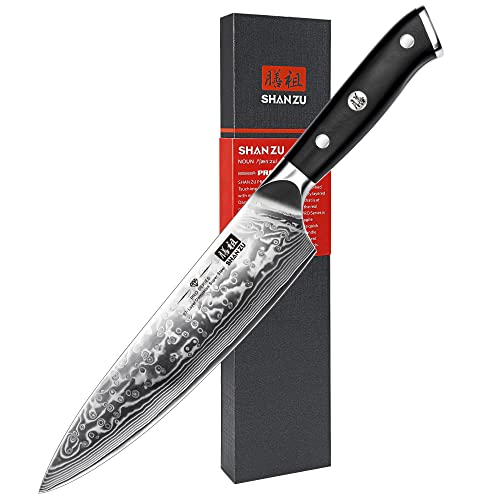
SHAN ZU 8-Inch Damascus Chef Knife
Best for: Cooking tasks requiring a heavy, sharp chef knife
- Blade Length
- 8 in
- Knife Type
- Chef Knife
- Blade Material
- 10Cr15Mov Damascus steel
- Construction
- Forged, 67 layers
- Edge Angle
- 15°
- Blade Hardness
- 62 HRC
View on Amazon: SHAN ZU 8-Inch Damascus Chef Knife Affiliate link
The SHAN ZU 8 Inch Damascus Chef Knife uses 10Cr15Mov Japanese steel forged into 67 layers. It reaches 62 HRC hardness and features a 15-degree edge angle for sharpness. The frosted glass fiber G10 handle offers a solid, ergonomic grip. This knife suits cooks who want a durable, high-performance tool with a traditional layered blade pattern.
Pros
- 62 HRC blade hardness for long-lasting sharpness
- 67-layer forged Damascus construction
- 15-degree edge angle per side
- Frosted glass fiber G10 handle
Cons
- 8-inch blade length exceeds the 7-inch focus of this guide
- 270-gram weight is heavier than standard santoku knives
- Chef knife style rather than santoku profile
Good fit if
- You prefer a heavier, more substantial knife for chopping
- You want a genuine forged Damascus pattern
- You need a versatile chef knife for general kitchen tasks
Skip if
- You strictly require a 7-inch blade length
- You prefer a lighter knife for extended prep work
- You are looking for a traditional santoku shape
Verdict: SHAN ZU 8 Inch Damascus Chef Knife delivers exceptional durability and sharpness through its 67-layer forged steel and 62 HRC hardness. It is best for cooks who prioritize a robust, high-performance chef knife over a standard santoku profile.
Specifications side by side
| Spec | imarku 7-Inch High-Carbon Santoku Knife | Imarku 8-Inch Japanese Chef Knife | HOSHANHO 8-Inch Japanese High-Carbon Chef Knife | HOSHANHO 7-Inch Flexible Fillet Knife | HOSHANHO 7-Inch Japanese Santoku Knife | HOSHANHO 7-Inch Japanese Nakiri Knife | SHAN ZU 8-Inch Damascus Chef Knife |
|---|---|---|---|---|---|---|---|
| Blade Length | 7" | 8" | 8 inch | 7 in | 7 in | 7 Inch | 8 in |
| Knife Type | Santoku Knife | Chef's Knife | Chef's Knife | Fillet, Boning | Santoku, Chef | Nakiri Knife | Chef Knife |
| Blade Material | Japanese high carbon stainless | High-carbon stainless steel | 10Cr15CoMoV | Japanese 10Cr15CoMoV | Japanese 10Cr15CoMoV | 10Cr15CoMoV high carbon stainless steel | 10Cr15Mov Damascus steel |
| Construction | not stated | not stated | not stated | not stated | Forged, triple-layer laminated | not stated | Forged, 67 layers |
| Edge Type | Hollow edge | not stated | not stated | not stated | not stated | not stated | not stated |
| Edge Angle | 15-18° per side | not stated | 13 degree | 15° per side | 15° | 15 degree | 15° |
| Blade Hardness | not stated | 56-58 HRC | up to 60 HRC | not stated | 62 HRC | 60HRC | 62 HRC |
| Handle Material | Pakkawood | Pakka | Wood | Pakkawood | Pakkawood | Pakkawood | G10 |
| Color | Brown and Silver | Deep Brown | 8 inch Chef Knife | Silver | Silver | Silver | Chef Knife |
| Style | Japanese | Japanese | Japanese | Japanese | Japanese | Japanese | Japanese |
| Recommended Use | not stated | not stated | not stated | Boning, Meat | not stated | Vegetables, Meat | not stated |
| Dimensions | 12 × 3 × 1 inches | 13 × 3 × 1 inches | not stated | not stated | 1.97 × 1.97 × 11.8 inches | 10 × 2 × 2.7 inches | 13.2 × 1.18 × 1 inches |
| Weight | 6.88 ounces | 6.56 ounces | 12.3 ounces | 10.6 ounces | 12.3 ounces | 12.3 ounces | 9.17 ounces |
| Length | not stated | not stated | 13.5 inches | not stated | not stated | not stated | not stated |
| Size | 7" | 8" | 8" | 7" | 7" | 7" | 8" |
| Model | I-KSK0064DB | 8-inch chef knife | 8 inch Chef Knife | 7 inch Fillet Knife | 7 inch Santoku Knife | 7 inch Nakiri Knife | SZPCS-2017-002 |
Readers of this guide also look at fabater 7 inch e book alternatives.
Frequently asked questions
What is the difference between a santoku and a chef knife?
A santoku features a thinner, lighter blade with a shear edge for slicing, while a chef knife has a curved belly for rocking cuts. The imarku 7-inch model is a santoku, whereas the imarku 8-inch alternative is a chef knife. Both use high-carbon steel but serve different cutting styles.
Is high-carbon steel better than stainless steel for knives?
High-carbon steel holds a sharper edge longer and is easier to sharpen than standard stainless steel. The imarku and HOSHANHO knives listed here use high-carbon steel for precision. You must maintain these blades to prevent rust, as they lack the corrosion resistance of full stainless options.
How heavy is a typical 7-inch santoku knife?
A 7-inch santoku usually weighs between 6 and 12 ounces. The imarku 7-inch model weighs 6.88 ounces, offering a light feel. In contrast, the HOSHANHO 7-inch Santoku and Nakiri knives weigh 12.3 ounces, providing more heft for chopping tasks.
What does blade hardness HRC mean for performance?
HRC measures the steel's hardness on the Rockwell scale. Higher numbers indicate a harder, sharper edge that holds longer. The HOSHANHO Nakiri features a 60 HRC blade. The SHAN ZU Damascus knife reaches 62 HRC, offering exceptional durability and sharpness for heavy use.
Which handle material is best for kitchen knives?
Pakkawood and natural wood are common choices for balance and comfort. The imarku knives use Pakkawood handles for durability in wet environments. The HOSHANHO models feature wooden handles, which provide a traditional feel but require more care to maintain their finish and prevent cracking.
Can a santoku knife replace a chef knife entirely?
Santoku knives excel at slicing and chopping but lack the curved belly for rocking cuts. The imarku 8-inch chef knife offers a versatile alternative for those tasks. If you need precision slicing, the 7-inch santoku is ideal, but a chef knife handles broader duties better.
What is a Damascus steel knife?
Damascus steel involves layering different metals to create a durable, patterned blade. The SHAN ZU 8-inch knife uses 67-layer forged steel. This construction enhances durability and sharpness, making it suitable for cooks who prioritize robust performance over the lighter profile of a standard santoku.
Is a flexible fillet knife good for general cooking?
A flexible fillet knife is specialized for fish preparation and boning. The HOSHANHO 7-inch fillet knife offers precision for detailed work. It is not ideal for general kitchen tasks like chopping vegetables or meat. Use it specifically for seafood to avoid damaging the flexible blade.