Imarku or SHAN ZU? Kitchen Knives Compared in 2026
As an Amazon Associate we earn from qualifying purchases. Links on this page are affiliate links.
When comparing imarku vs SHAN ZU kitchen knife options, you see two 8-inch Japanese-style chef knives with distinct material choices. Both target home cooks and professionals seeking reliable daily tools. The primary difference lies in blade construction. The imarku uses high-carbon stainless steel for durability, while the SHAN ZU offers a layered Damascus build. You also need to consider handle materials, as one uses Pakka wood and the other G10 fiberglass. These specs dictate how each knife feels and performs in your kitchen.
Key differences
| Aspect | Imarku 8-Inch Japanese Chef Knife | SHAN ZU 8-Inch Damascus Chef Knife |
|---|---|---|
| Blade Material | High-Carbon Stainless Steel | 10Cr15Mov Damascus Japanese steel |
| Blade Hardness | 56-58 HRC | 62 HRC |
| Construction | not listed | Forged, 67 layers |
| Handle Material | Pakka | Frosted glass fiber G10 |
| Edge Angle | not listed | 15° |
| Weight | 6.56 ounces | 9.17 ounces |
Which one should you choose?
Choose Imarku 8-Inch Japanese Chef Knife if
- You prefer a lighter knife that reduces hand fatigue during long prep sessions
- You want a high-carbon stainless steel blade that resists tarnishing easily
- You value a handle made from FSC-Certified Pakka wood for a natural feel
Choose SHAN ZU 8-Inch Damascus Chef Knife if
- You need a harder blade edge that holds its sharpness longer
- You want a multi-layer Damascus steel construction for enhanced toughness
- You prefer a solid G10 handle that provides a secure, ergonomic grip
Verdict: Choose the imarku if you prioritize a lighter weight and easier maintenance with its high-carbon stainless steel blade. Pick the SHAN ZU if you need superior edge retention from its 62 HRC hardness and layered Damascus construction. Your choice depends on whether you value weight and corrosion resistance or maximum hardness and structural complexity.
Imarku vs SHAN ZU Knife Comparison
Blade Material
The Imarku 8-Inch Japanese Chef Knife is made from high-carbon stainless steel with 0.6-0.75% carbon and 16-18% chrome. This composition provides corrosion resistance and a glossy finish that resists tarnishing over time. In contrast, the SHAN ZU 8-Inch Damascus Chef Knife uses 10Cr15Mov Damascus Japanese steel. This core material is layered with carbon steel sheets to create a distinct pattern. The SHAN ZU blade is noted for being rust-resistant and wear-resistant due to its specific steel alloy and forging process. You choose Imarku for standard high-carbon stainless durability or SHAN ZU for the layered Damascus construction.
Blade Hardness
Blade hardness directly impacts edge retention and sharpening ease. The Imarku knife has a Rockwell Hardness Scale (HRC) rating of 56-58. This hardness level makes it sturdy and suitable for tough tasks like cutting meat off bones, while remaining easier to sharpen than harder steels. The SHAN ZU knife is significantly harder, with a stated hardness of 62 HRC. This higher hardness allows the SHAN ZU blade to maintain a super sharp edge for longer periods and offers greater wear resistance. If you prioritize long-lasting sharpness and do not mind more frequent professional sharpening, the SHAN ZU is the stronger choice.
Handle Material
Comfort and grip stability are crucial for extended kitchen use. The Imarku features an ergonomic Pakka handle made from FSC-Certified wood originating from Africa. This material is known for comfort, strength, and stability, helping to minimize finger numbness or fatigue during prolonged chopping. The SHAN ZU uses a frosted glass fiber G10 handle. G10 is often considered more solid and durable than wood, providing a comfortable and secure grip that resists moisture absorption better than natural materials. Both handles are designed for top-balanced professional performance, but you may prefer the traditional feel of Imarku’s Pakka wood or the robust durability of SHAN ZU’s G10.
Edge Angle
The blade edge angle determines how the knife cuts through food. The SHAN ZU chef knife specifies a precise cutting angle of 15 degrees. This acute angle allows for thinner, more precise slices and is typical for high-end Japanese knives designed for sharpness. The Imarku product data does not list a specific edge angle. However, it is described as having an ultra-sharp edge boosted by Japanese engineering, suitable for dicing, slicing, and chopping. While the SHAN ZU offers a defined geometric advantage for precision work, the Imarku remains a versatile multipurpose tool without a specified angle constraint.
Construction
Blade construction affects toughness and visual appeal. The SHAN ZU knife is forged from 67 layers of steel, created by repeatedly folding and forging sheets of carbon steel and the 10Cr15Mov core. This layered construction enhances wear resistance, rust prevention, and toughness, resulting in a visible Damascus pattern that becomes more distinct after polishing. The Imarku knife is described as manufactured from high-quality stainless steel without mention of layering or forging techniques. It relies on its carbon content for hardness rather than complex layering. If you value the structural benefits and aesthetic of layered steel, the SHAN ZU is superior.
Weight
Knife weight influences control and fatigue. The Imarku 8-Inch Chef Knife weighs 6.56 ounces. This lighter weight may be preferable for users who prefer a nimble tool for delicate tasks or have less hand strength. The SHAN ZU 8-Inch Chef Knife weighs 9.17 ounces, making it noticeably heavier. The added weight can provide more momentum for cutting through denser foods, though it may cause more fatigue during extended use. The SHAN ZU also has a blade thickness of 2.2 mm, compared to the Imarku’s unspecified thickness but implied to be standard for its class. You should choose based on whether you prefer a lighter or heavier feel.
Choose Between Imarku and SHAN ZU
Users seeking high hardness and sharpness
The SHAN ZU knife achieves 62 HRC hardness, significantly higher than the imarku's 56-58 HRC range. This increased hardness allows for a finer edge and better edge retention. Its 10Cr15Mov Damascus core provides superior wear resistance, making it ideal for cooks who prioritize precision cutting performance and long-term sharpness.
Buyers preferring lighter weight and balance
The imarku knife weighs 6.56 ounces, which is notably lighter than the SHAN ZU's 9.17 ounces. This reduced weight can minimize hand fatigue during extended prep sessions. Its ergonomic Pakka handle and lower mass make it a comfortable choice for users who prefer a less cumbersome tool for daily kitchen tasks.
Shoppers wanting corrosion-resistant stainless steel
The imarku features high-carbon stainless steel with 16-18% chrome, ensuring strong corrosion resistance and a tarnish-free finish. While the SHAN ZU offers a Damascus pattern, the imarku's material composition focuses on durability and ease of maintenance. This makes it a practical option for those who want reliable, low-maintenance stainless steel performance.
Users valuing layered steel construction
The SHAN ZU knife is constructed from 67 layers of forged steel, enhancing its toughness and rust prevention. This layered Damascus design provides distinct aesthetic appeal alongside functional benefits. If you appreciate traditional forging techniques and the visual character of layered metal, this construction offers both durability and a professional-grade appearance.
The products compared

Imarku 8-Inch Japanese Chef Knife
Best for: Everyday chopping and corrosion resistance
- Blade Length
- 8"
- Knife Type
- Chef's Knife
- Blade Material
- High-carbon stainless steel
- Blade Hardness
- 56-58 HRC
- Handle Material
- Pakka
- Style
- Japanese
View on Amazon: Imarku 8-Inch Japanese Chef Knife Affiliate link
This Imarku chef knife features an 8-inch blade made from high-carbon stainless steel with 0.6-0.75% carbon content. The blade hardness reaches 56-58 HRC, offering greater durability than standard knives. It includes an ergonomic Pakka handle for comfort during extended use. The corrosion-resistant finish ensures longevity. You get a versatile tool suitable for chopping, slicing, and dicing tasks in your kitchen.
Pros
- High-carbon stainless steel blade with 0.6-0.75% carbon content
- Blade hardness of 56-58 HRC for increased sturdiness
- Ergonomic Pakka handle designed to reduce hand fatigue
- Corrosion-resistant due to 16-18% chrome content
Cons
- Lower blade hardness (56-58 HRC) compared to the SHAN ZU option
- Heavier build at 6.56 ounces
- No specific edge angle or sharpening angle data provided
Good fit if
- You prefer a traditional Japanese-style chef knife
- You value corrosion resistance and long-term durability
- You want an ergonomic handle for extended prep time
Skip if
- You need the hardest possible blade edge available
- You prefer a lighter knife under 6 ounces
- You require specific sharpening angle details
Verdict: Imarku 8 Inch Japanese Chef Knife suits cooks who prioritize corrosion resistance and ergonomic comfort over maximum edge retention. It is a solid choice for daily chopping and slicing tasks.
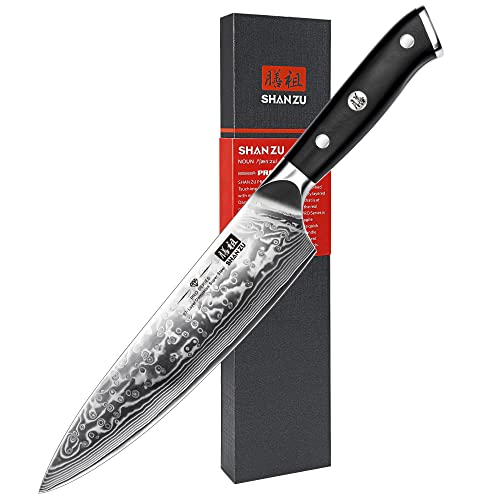
SHAN ZU 8-Inch Damascus Chef Knife
Best for: Durable daily prep with a solid balance
- Blade Length
- 8 in
- Knife Type
- Chef Knife
- Blade Material
- 10Cr15Mov Damascus steel
- Construction
- Forged, 67 layers
- Edge Angle
- 15°
- Blade Hardness
- 62 HRC
View on Amazon: SHAN ZU 8-Inch Damascus Chef Knife Affiliate link
This SHAN ZU chef knife features an 8-inch blade made from 10Cr15Mov Damascus steel. It has a 62 HRC hardness rating and a 15-degree edge angle. The handle is constructed from frosted glass fiber G10 for a solid grip. Weighing 270 grams, it offers a top-balanced feel. This knife suits those who want a durable, sharp tool with a traditional forged appearance.
Pros
- 62 HRC blade hardness for long-lasting sharpness
- 67-layer forged Damascus steel construction
- Frosted glass fiber G10 handle for solid grip
- 15-degree edge angle for precise cutting
Cons
- Heavier at 270 grams than lighter alternatives
- No included sharpening stone or accessory
- Standard 12-month warranty period
Good fit if
- You prefer a heavier knife for better chopping momentum
- You want a durable steel core that resists rust
- You like the look of traditional forged blades
Skip if
- You need a lightweight knife for extended prep sessions
- You require a blade harder than 62 HRC
- You prefer a wooden handle over synthetic materials
Verdict: SHAN ZU 8 Inch Damascus Chef Knife is a sturdy option for cooks who value durability and a solid balance. It fits users who want a reliable, high-hardness blade for daily kitchen tasks.
Specifications side by side
| Spec | Imarku 8-Inch Japanese Chef Knife | SHAN ZU 8-Inch Damascus Chef Knife |
|---|---|---|
| Blade Length | 8" | 8 in |
| Knife Type | Chef's Knife | Chef Knife |
| Blade Material | High-carbon stainless steel | 10Cr15Mov Damascus steel |
| Construction | not stated | Forged, 67 layers |
| Edge Angle | not stated | 15° |
| Blade Hardness | 56-58 HRC | 62 HRC |
| Handle Material | Pakka | G10 |
| Style | Japanese | Japanese |
| Dimensions | 13 × 3 × 1 inches | 13.2 × 1.18 × 1 inches |
| Weight | 6.56 ounces | 9.17 ounces |
| Size | 8" | 8" |
| Color | Deep Brown | Chef Knife |
| Model | 8-inch chef knife | SZPCS-2017-002 |
Frequently asked questions
Which knife is lighter, Imarku or SHAN ZU?
The Imarku 8-Inch Japanese Chef Knife is lighter. It weighs 6.56 ounces. The SHAN ZU 8-Inch Damascus Chef Knife weighs 9.17 ounces. You may prefer the Imarku if you want less hand fatigue during long prep sessions. The SHAN ZU feels heavier in your hand.
Are both knives made of Japanese style steel?
Yes, both knives are classified as Japanese style. The Imarku model is listed with a Japanese style attribute. The SHAN ZU model also carries a Japanese style designation. Both brands target users looking for traditional Japanese cutting geometry in an 8-inch chef knife format.
What is the blade width difference between the two?
The Imarku has a wider blade. Its width measures 3 inches. The SHAN ZU blade width is 1.18 inches. The Imarku offers more surface area for food transfer. The SHAN ZU has a narrower profile, which may suit different cutting techniques.
Which knife has a better corrosion resistance?
The Imarku is better for corrosion resistance. Its verdict highlights this feature as a primary benefit. The SHAN ZU focuses on durability and hardness. If you cook with acidic foods often, the Imarku’s design prioritizes resisting tarnishing and rust over time.
Is the SHAN ZU knife heavier than the Imarku?
Yes, the SHAN ZU is heavier. It weighs 9.17 ounces. The Imarku weighs 6.56 ounces. The SHAN ZU provides a solid balance that some users find sturdy. The Imarku is lighter, which might be preferable for those who prioritize ease of use.
What is the total length of each knife?
The Imarku is 13 inches long. The SHAN ZU is 13.2 inches long. Both are 8-inch blade knives. The SHAN ZU is slightly longer overall. The difference is minimal, but the Imarku offers a more compact handle-to-blade ratio for some users.