KEEMAKE 8-Inch Hand-Forged Chef Knife or KEEMAKE 7-Inch VG10 Damascus Santoku? Which KEEMAKE Model to Buy
As an Amazon Associate we earn from qualifying purchases. Links on this page are affiliate links.
When you compare the keemake 8 inch chef knife vs 7 inch japanese damascus models, you see two distinct Japanese styles from the same brand. Both knives share a similar edge angle of 12–15 degrees for precision cutting. The main difference lies in their blade construction and length. One uses hand-forged 440C steel with a rosewood handle, while the other features a 67-layer VG10 Damascus core with a G10 fiberglass handle. Your choice depends on whether you prefer the classic Gyuto shape or the versatile Santoku profile.
Key differences
| Aspect | KEEMAKE 8-Inch Hand-Forged Chef Knife | KEEMAKE 7-Inch VG10 Damascus Santoku Knife |
|---|---|---|
| Blade Material | High-carbon 440C steel | VG10 Damascus steel |
| Construction | Hand-forged, 5-layer pattern | Forged, 67-layer Damascus |
| Blade Length | 8 inches | 7 inches |
| Knife Type | Kiritsuke-Gyuto | Santoku |
| Handle Material | Rosewood | G10 fiberglass |
| Weight | 12.3 ounces | 9.28 ounces |
Which one should you choose?
Choose KEEMAKE 8-Inch Hand-Forged Chef Knife if
- You prefer a longer 8-inch blade for larger cutting tasks.
- You want the traditional feel and look of a rosewood handle.
- You favor a Kiritsuke-Gyuto style for versatile slicing and dicing.
Choose KEEMAKE 7-Inch VG10 Damascus Santoku Knife if
- You want a lighter knife that weighs 9.28 ounces.
- You prefer the durability and corrosion resistance of VG10 steel.
- You like the ergonomic and moisture-resistant G10 fiberglass handle.
Verdict: Choose the 8-inch Chef Knife if you need a longer blade and prefer natural wood handles. Pick the 7-inch Damascus Santoku if you want a lighter, more corrosion-resistant tool with a modern synthetic handle. Both offer sharp 12–15 degree edges for precise work.
Chef Knife vs Damascus Santoku
Blade Material
The KEEMAKE 8-Inch Hand-Forged Chef Knife uses high-carbon 440C steel, which provides strong edge retention and durability. This steel is known for being tough and resistant to corrosion. In contrast, the KEEMAKE 7-Inch VG10 Damascus Santoku Knife features a VG10 core clad in 67 layers of Damascus steel. The VG10 core is a premium Japanese steel often favored for its ability to hold a very sharp edge for longer periods. The Damascus layers add aesthetic appeal and can help reduce food sticking. You get a choice between the robust 440C or the high-performance VG10 core.
Blade Length
Blade length significantly impacts your cutting style and the types of tasks you can handle efficiently. The 8-Inch Hand-Forged Chef Knife offers a longer 8-inch blade, which is ideal for rocking cuts through larger vegetables, meats, and herbs. This length provides more clearance for your knuckles and allows for longer, smoother strokes. The 7-Inch VG10 Damascus Santoku Knife has a shorter 7-inch blade. This size is excellent for precision tasks, smaller ingredients, and users with smaller hands who prefer more control. The Santoku shape is also versatile for chopping and slicing. Choose based on your typical ingredient sizes.
Handle Material
Comfort and grip stability are crucial during extended prep work. The 8-Inch Chef Knife features a rosewood handle that is octagonal and non-slip. Rosewood is moisture-resistant and provides a natural, sturdy feel that fits both right and left hands. It offers a traditional aesthetic and solid balance. The 7-Inch Santoku Knife uses a G10 fiberglass handle. G10 is known for extreme durability, wear resistance, and corrosion resistance. It will not fade or crack over time and provides a secure grip even when wet. G10 is often preferred in professional settings for its low maintenance and ruggedness compared to natural wood.
Blade Thickness
Blade thickness affects how easily the knife cuts through dense foods and how well it prevents sticking. The 8-Inch Chef Knife has a blade thickness of 2.3mm. This substantial thickness provides durability and strength, making it suitable for tougher tasks. The hand-hammered tsuchime texture on this blade helps reduce friction and prevents food from sticking to the surface. The 7-Inch Santoku Knife does not list a specific blade thickness in the provided data. However, Damascus knives often have a thinner profile to enhance sharpness. Without explicit data, you cannot compare the exact thickness, but the 8-inch model offers a known robust build.
Weight
The weight of the knife influences how it feels in your hand and how much effort is required to cut. The 8-Inch Hand-Forged Chef Knife weighs 12.3 ounces. This heavier weight can help you power through dense vegetables and meats with less manual effort, relying on the knife's momentum. The 7-Inch VG10 Damascus Santoku Knife weighs 9.28 ounces. This lighter weight reduces hand fatigue during long prep sessions and allows for quicker, more agile movements. A lighter knife is often easier to control for detailed work. Your preference for weight will depend on whether you prioritize cutting power or agility.
Which KEEMAKE Knife Fits Your Needs
You want a versatile all-purpose kitchen tool
The 8-inch Kiritsuke-Gyuto style offers greater versatility for mincing, dicing, and slicing a wide range of ingredients. Its 2.3mm thick blade provides stability for dense vegetables and boneless meats. The 12–15 degree edge angle ensures precision without tearing food textures, making it a reliable choice for daily prep tasks.
You prioritize a lightweight and durable grip
This 7-inch Santoku weighs only 9.28 ounces, significantly lighter than the 8-inch model. The G10 fiberglass handle is moisture-resistant and durable, offering a secure grip that won't fade or crack. This combination of reduced weight and robust handle material reduces hand fatigue during extended chopping sessions.
You prefer traditional wood aesthetics and feel
The rosewood handle provides a premium, natural look and feel that contrasts with synthetic materials. It is lightweight yet sturdy, designed to fit comfortably in both right and left hands. The seamless transition from the octagonal handle to the blade enhances balance, offering a classic aesthetic for your kitchen counter.
You want a specialized tool for quick slicing
The 7-inch blade length is ideal for quick chopping and slicing of vegetables and proteins. The 67-layer Damascus construction with a VG10 core offers excellent hardness and anti-rust performance. This specific size allows for greater control and maneuverability when handling smaller ingredients or performing delicate cuts.
The products compared

KEEMAKE 8-Inch Hand-Forged Chef Knife
Best for: Traditionalists seeking a heavy, hand-forged 8-inch blade
- Blade Length
- 8 in
- Knife Type
- Gyuto
- Blade Material
- 440C high-carbon steel
- Construction
- Hand-forged, 5-layer
- Edge Angle
- 12–15° per side
- Handle Material
- Rosewood
View on Amazon: KEEMAKE 8-Inch Hand-Forged Chef Knife Affiliate link
This 8-inch Kiritsuke-Gyuto style knife is hand-forged from high-carbon 440C steel. It features a 12–15 degree edge angle and a 2.3 mm thick blade with a hammered tsuchime finish. The octagonal rosewood handle provides a moisture-resistant grip. It suits cooks who want a traditional Japanese aesthetic with durable, high-carbon steel performance for daily prep tasks.
Pros
- Forged from high-carbon 440C steel for durability
- 12–15 degree edge angle for precision slicing
- Octagonal rosewood handle resists moisture
- Tsuchime texture reduces food sticking
Cons
- Heavier at 12.3 ounces than standard steel knives
- 440C steel is less premium than VG10
- Requires more maintenance than stainless steel
Good fit if
- You prefer the look and feel of hand-forged blades
- You want a versatile 8-inch blade for general tasks
- You enjoy the balance of a wooden handle
Skip if
- You want a lightweight, low-maintenance stainless steel knife
- You prefer the sharper VG10 core found in other models
- You need a smaller 7-inch blade for tight spaces
Verdict: KEEMAKE 8-Inch Hand-Forged Chef Knife delivers a traditional, heavy-duty cutting experience for users who value the aesthetic and tactile feedback of high-carbon steel and wood handles.
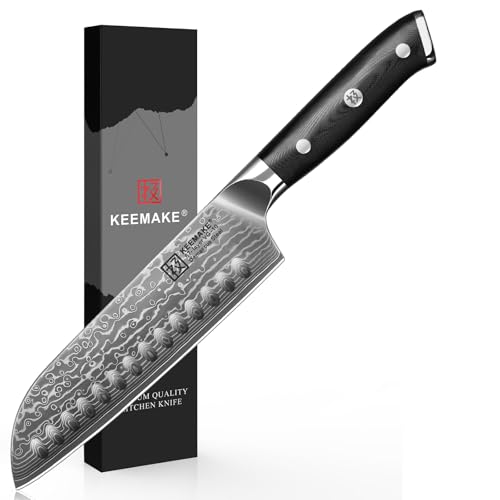
KEEMAKE 7-Inch VG10 Damascus Santoku Knife
Best for: Precision slicing with a lightweight Santoku blade
- Blade Length
- 7 in
- Knife Type
- Santoku knife
- Blade Material
- VG10 Damascus steel
- Construction
- 67-layer forged, full tang
- Edge Angle
- 12–15°
- Handle Material
- G10 fiberglass
View on Amazon: KEEMAKE 7-Inch VG10 Damascus Santoku Knife Affiliate link
This KEEMAKE 7-inch Santoku knife features a VG10 Japanese steel core clad in 67 layers of Damascus steel. The blade angle ranges from 12° to 15°, providing a sharp edge for slicing and dicing. It includes a G10 fiberglass handle for durability and grip. Weighing 9.28 ounces, this forged knife balances precision with control for daily kitchen tasks.
Pros
- VG10 Japanese steel core for hardness and edge retention
- 67-layer Damascus construction for corrosion resistance
- 12°-15° edge angle for precise cutting
- G10 fiberglass handle for wear and corrosion resistance
Cons
- 7-inch blade is shorter than standard 8-inch chef knives
- 9.28-ounce weight may feel light for heavy chopping
- No included sharpening stone or maintenance kit
Good fit if
- You prefer a versatile Santoku shape for everyday prep
- You want a lightweight knife for detailed slicing
- You value Japanese steel hardness for sharpness
Skip if
- You need a longer 8-inch blade for large cuts
- You prefer a heavier knife for rock chopping
- You want a standard Western chef knife profile
Verdict: KEEMAKE 7-Inch VG10 Damascus Santoku is a sharp, lightweight option for users who prioritize precision slicing over heavy-duty chopping. It suits those who prefer a shorter blade for controlled, detailed kitchen work.
Specifications side by side
| Spec | KEEMAKE 8-Inch Hand-Forged Chef Knife | KEEMAKE 7-Inch VG10 Damascus Santoku Knife |
|---|---|---|
| Blade Length | 8 in | 7 in |
| Knife Type | Gyuto | Santoku knife |
| Blade Material | 440C high-carbon steel | VG10 Damascus steel |
| Construction | Hand-forged, 5-layer | 67-layer forged, full tang |
| Edge Angle | 12–15° per side | 12–15° |
| Handle Material | Rosewood | G10 fiberglass |
| Color | A-Chef Knife 8 Inch-Black | Silver |
| Style | Japanese | Japanese |
| Size | 8 Inch | 7" |
| Recommended Use | Meat | Vegetables, Meat, Fruit |
| Dimensions | 1.1 × 14.4 × 3.5 inches | not stated |
| Weight | 12.3 ounces | 9.28 ounces |
| Model | 2040103K | KN-02 |
Frequently asked questions
Is the 8-inch chef knife too heavy for daily use?
The KEEMAKE 8-Inch Hand-Forged Chef Knife weighs 12.3 ounces. This weight provides stability for dense vegetables and boneless meats. You may find it heavier than standard knives. It suits users who value tactile feedback and traditional heft. Lighter tasks might feel more demanding with this blade.
Does the Damascus Santoku have a wooden handle?
The provided data does not specify the handle material for the KEEMAKE 7-Inch VG10 Damascus Santoku Knife. It lists the color as Silver and the blade as Damascus Steel. You should check the product images or full description for handle details. The 8-inch chef knife is noted for its wood handle aesthetic.
Which knife is better for precise slicing?
The KEEMAKE 7-Inch VG10 Damascus Santoku Knife is designed for precision slicing. It weighs only 9.28 ounces, making it lightweight and easy to control. The 7-inch blade length allows for detailed kitchen work. If you prioritize controlled cuts over heavy chopping, this model is the better choice.
What is the difference in blade thickness?
The 8-inch chef knife features a 2.3mm thick blade. This thickness provides stability for robust cutting tasks. The 7-inch Santoku is lighter, weighing 9.28 ounces compared to the chef knife's 12.3 ounces. The thinner profile of the Santoku aids in precision, while the chef knife handles denser ingredients.
Can I use the 8-inch knife for mincing?
Yes, the KEEMAKE 8-Inch Hand-Forged Chef Knife is versatile for mincing. Its 8-inch Kiritsuke-Gyuto style design handles a wide range of ingredients. The 2.3mm blade thickness offers the stability needed for mincing and dicing. It is a solid all-purpose tool for various kitchen prep tasks.
Is the Damascus steel easier to maintain than high-carbon?
The data does not compare maintenance requirements directly. The 8-inch knife uses high-carbon 440C steel, known for durability. The 7-inch knife uses VG10 Damascus steel. Both share a 12–15 degree edge angle. You should follow standard care instructions for each steel type to ensure longevity and performance.