Shun or Atumuryou? Kitchen Knives Compared in 2026
As an Amazon Associate we earn from qualifying purchases. Links on this page are affiliate links.
You are comparing the shun vs atumuryou kitchen knife for your prep tasks. Both are 8-inch Japanese-style chef knives built for precision cutting. They share a layered Damascus construction and premium steel cores designed for lasting sharpness. The main difference lies in the specific steel grade and handle materials. Shun uses VG-MAX steel with Pakkawood, while Atumuryou opts for VG-10 steel with a stabilized wood and resin handle. Each offers distinct ergonomic and performance traits for your kitchen.
Key differences
| Aspect | Shun Premier 8-Inch Damascus Chef's Knife | Atumuryou 8-Inch VG10 Damascus Chef Knife |
|---|---|---|
| Blade Material | VG-MAX steel | VG-10 steel |
| Construction Layers | 68 layers | 67 layers |
| Blade Hardness | not listed | 62 HRC |
| Edge Angle | 16-degree | not listed |
| Handle Material | Pakkawood | Stabilized wood and resin |
| Weight | 7.55 ounces | 1.08 pounds |
Which one should you choose?
Choose Shun Premier 8-Inch Damascus Chef's Knife if
- You prefer a lighter knife that reduces hand fatigue during long prep sessions.
- You value a known 16-degree edge angle for precise slicing.
- You want a handle made from durable Pakkawood.
Choose Atumuryou 8-Inch VG10 Damascus Chef Knife if
- You prioritize a specified 62 HRC hardness rating for edge retention.
- You prefer the aesthetic and grip of stabilized wood and resin.
- You want a knife with a rust-proof Damascus pattern.
Verdict: Choose the Shun Premier if you prioritize a lighter weight and a specific 16-degree edge angle for precision work. Select the Atumuryou if you want a clearly defined 62 HRC hardness and a stabilized wood handle. Both knives offer high-quality Damascus construction for reliable kitchen performance.
Shun vs Atumuryou Knife Specs
Blade Material
Shun uses VG-MAX steel for its core, while Atumuryou relies on VG-10 steel. Both are premium stainless steels known for holding a sharp edge and resisting corrosion. VG-10 is a well-established standard in Japanese cutlery, often cited for its high carbon content and purity. Shun’s VG-MAX is their proprietary blend, designed to enhance the properties of traditional VG-10 by adding more carbon and chromium. This slight variation aims to improve toughness and stain resistance. You get excellent sharpness from either core, but the specific metallurgy differs. Shun’s proprietary mix may offer a unique balance of hardness and durability compared to the standard VG-10 used by Atumuryou.
Construction Layers
The Shun Premier features 68 layers of Damascus cladding, whereas the Atumuryou knife has 67 layers. This layering creates the distinctive wavy pattern on the blade surface and adds structural integrity to the softer outer steel surrounding the hard core. The difference between 67 and 68 layers is negligible in terms of performance. Both constructions aim to combine a hard, sharp core with a softer, flexible exterior to prevent chipping. The Damascus pattern is largely aesthetic, though it can help reduce food adhesion. You receive a beautifully patterned blade in either case, with virtually identical structural benefits derived from the clad construction method.
Edge Angle
Shun specifies a 16-degree edge angle per side, which is typical for many Japanese knives. This acute angle allows for very fine, precise cuts. The Atumuryou product data does not list a specific edge angle. Typically, Japanese knives fall between 15 and 20 degrees per side. A 16-degree edge is generally sharper out of the box but may require more careful maintenance to avoid rolling or chipping compared to a wider angle. Without a specified angle for Atumuryou, it is hard to say if it is sharper or more durable. Shun’s precise specification gives you a clear expectation of the cutting geometry.
Handle Material
Shun uses Pakkawood for the handle, a durable, laminated wood material that is resistant to moisture and heat. Atumuryou uses stabilized wood and resin. Both materials are chosen for stability and grip. Pakkawood is a common choice in professional kitchens due to its consistency and hygiene. Stabilized wood involves impregnating wood with resin under pressure, making it extremely hard and water-resistant. The Atumuryou handle is described as ergonomic and slip-resistant. Shun’s handle is contoured for comfort. Both offer secure grips, but the tactile feel will differ. Pakkawood has a traditional wood look, while stabilized wood can have a more uniform, plastic-like appearance depending on the finish.
Blade Finish
Shun features a hammered tsuchime finish on the blade. This pattern of dimples helps reduce drag and prevents food from sticking to the steel during slicing. The Atumuryou description highlights the Damascus pattern but does not explicitly mention a hammered finish. The Damascus layers themselves create a textured surface, which may offer some food release benefits, but it is not the same as the intentional tsuchime dimpling. If you frequently slice starchy or moist foods, the hammered finish on the Shun can be a practical advantage. It reduces suction between the blade and the food item, making cuts cleaner.
Weight
The Shun Premier weighs 7.55 ounces. The Atumuryou knife weighs 1.08 pounds, which converts to approximately 17.28 ounces. This is a significant difference in heft. The Atumuryou is more than twice as heavy as the Shun. A heavier knife can provide more momentum for chopping through dense vegetables or bone-in items, though it may cause fatigue during prolonged use. The Shun is much lighter, offering greater maneuverability and less wrist strain for detailed tasks like mincing herbs or slicing fish. Your preference for weight will dictate which feels better in your hand during daily prep.
Choose the right knife for you
You want a lightweight, balanced tool
The Shun Premier weighs 7.55 ounces, making it significantly lighter than the Atumuryou at 1.08 pounds. This reduced mass helps reduce wrist fatigue during long prep sessions. The Pakkawood handle provides a secure grip for precise control. If you prefer agility and ease of use over heavy-duty heft, this lighter profile suits your workflow better.
You prioritize high hardness and rust resistance
The Atumuryou features a VG-10 steel core with a hardness rating of 62 HRC. This high hardness ensures superior edge retention and sharpness compared to standard steels. The 67-layer Damascus cladding adds durability and stain resistance. If you value a blade that stays sharp longer and resists corrosion effectively, this specification meets your needs.
You prefer a traditional 16-degree edge angle
The Shun Premier offers a 16-degree edge angle, which is typical for Japanese knives and allows for very fine, precise cuts. This sharp angle reduces drag and prevents food from sticking to the blade. If you want that classic, razor-sharp performance for slicing and dicing without the need for frequent re-sharpening, this edge geometry is ideal.
You want a stable, ergonomic handle
The Atumuryou uses a handle made from stabilized wood and resin, designed for an ergonomic and slip-resistant grip. This material choice enhances stability and comfort during extended use. If you prefer a handle that offers a secure hold and reduces hand strain, this construction provides the tactile feedback and balance you need for consistent performance.
The products compared
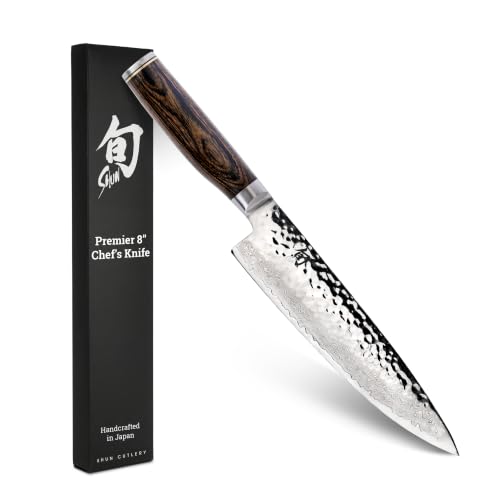
Shun Premier 8-Inch Damascus Chef's Knife
Best for: Precision slicing with a traditional Japanese handle
- Blade Length
- 8"
- Knife Type
- Chef's Knife
- Blade Material
- VG-MAX
- Construction
- 68 layers of Damascus cladding
- Edge Angle
- 16-degree
- Handle Material
- Pakkawood
View on Amazon: Shun Premier 8-Inch Damascus Chef's Knife Affiliate link
The Shun Premier 8-inch Chef's Knife uses VG-MAX steel with 68 layers of Damascus cladding. It features a 16-degree edge angle for precision cutting. The hammered tsuchime finish reduces drag and prevents food sticking. A contoured Pakkawood handle provides a secure grip for left or right-handed use. This Japanese-crafted tool suits cooks who value sharpness and traditional design.
Pros
- VG-MAX steel core with 68 layers of Damascus cladding
- 16-degree edge angle for superior sharpness
- Hammered tsuchime finish reduces drag and food sticking
- Contoured Pakkawood handle for secure grip
Cons
- Heavier build at 7.55 ounces compared to lighter alternatives
- Pakkawood handle requires hand washing to maintain integrity
- No magnetic strip or sheath included in the data
Good fit if
- You prefer a 16-degree edge for fine slicing
- You want a Damascus-clad blade that resists sticking
- You value traditional Japanese craftsmanship in your tools
Skip if
- You need a lightweight knife under 6 ounces
- You prefer stainless steel without Damascus cladding
- You want a knife that is dishwasher safe
Verdict: The Shun Premier 8" Chef's Knife offers precise cutting with its 16-degree VG-MAX edge and anti-stick hammered finish. It fits cooks who prioritize traditional Japanese design and secure Pakkawood handling over minimal weight.

Atumuryou 8-Inch VG10 Damascus Chef Knife
Best for: Precision cutting with a durable, sharp edge
- Blade Length
- 8 in
- Knife Type
- Chef
- Blade Material
- VG-10, Damascus
- Construction
- 67-layer Damascus
- Edge Angle
- 12°
- Blade Hardness
- 62 HRC
View on Amazon: Atumuryou 8-Inch VG10 Damascus Chef Knife Affiliate link
This 8-inch Japanese chef knife features a VG-10 steel core hardened to 62 HRC, clad in 67 layers of Damascus steel. The blade measures 1.77 inches wide and 13.3 inches long, weighing 1.08 pounds. It includes a stabilized wood and resin handle for grip. The design targets users seeking a sharp, durable tool for meat, fish, and vegetable prep.
Pros
- VG-10 steel core with 62 HRC hardness
- 67-layer Damascus cladding for rust resistance
- Stabilized wood and resin handle for grip
- 8-inch blade width of 1.77 inches
Cons
- Heavier build at 1.08 pounds
- Longer overall length of 13.3 inches
- Stabilized wood handle requires careful maintenance
Good fit if
- You want a sharp VG-10 core for precision cuts
- You prefer a balanced, heavier knife for stability
- You like the look of Damascus patterns
Skip if
- You need a lightweight knife under 1 pound
- You prefer synthetic handles for easy cleaning
- You want a shorter 7-inch blade
Verdict: Atumuryou 8" Damascus VG-10 Chef Knife offers high hardness and a distinctive look for cooks who value edge retention and aesthetic detail.
Specifications side by side
| Spec | Shun Premier 8-Inch Damascus Chef's Knife | Atumuryou 8-Inch VG10 Damascus Chef Knife |
|---|---|---|
| Blade Length | 8" | 8 in |
| Knife Type | Chef's Knife | Chef |
| Blade Material | VG-MAX | VG-10, Damascus |
| Construction | 68 layers of Damascus cladding | 67-layer Damascus |
| Edge Angle | 16-degree | 12° |
| Blade Hardness | not stated | 62 HRC |
| Handle Material | Pakkawood | Stabilized wood and resin |
| Color | Brown | Wood (Classic) |
| Style | Japanese | Japanese |
| Dimensions | 13.3 × 0.82 × 1.82 inches | not stated |
| Weight | 7.55 ounces | 1.08 pounds |
| Length | not stated | 13.3 inches |
| Width | not stated | 1.77 inches |
| Size | 8" | 8" |
| Model | TDM0706 | AT8101-US02 |
Frequently asked questions
Which knife is lighter for daily prep?
The Shun Premier is significantly lighter. It weighs 7.55 ounces, while the Atumuryou weighs 1.08 pounds. The lower mass in the Shun model reduces hand fatigue during extended chopping tasks. This makes it a better choice if you prefer a lighter tool in your hand.
Do both knives have Japanese-style handles?
Yes, both feature traditional Japanese design elements. The Shun Premier uses a Pakkawood handle for a secure grip. The Atumuryou comes in a Classic wood style. Both materials offer a natural feel and traditional aesthetic that fits well in a standard kitchen setup.
What is the blade width difference?
The Atumuryou has a wider blade. Its width measures 1.77 inches, compared to the Shun Premier at 0.82 inches. The wider blade on the Atumuryou may help with moving larger volumes of chopped ingredients. The narrower Shun blade allows for more precise control in tight spaces.
Are both knives made with Damascus steel?
Yes, both feature Damascus construction. The Shun Premier has an anti-stick hammered finish on its layered steel. The Atumuryou is explicitly labeled as a Damascus Chef Knife with VG-10 steel. This layered design provides durability and a distinctive visual pattern on both blades.
Which model has the sharper edge angle?
The Shun Premier offers a sharper edge. It features a 16-degree VG-MAX edge. This acute angle allows for precise slicing of vegetables and proteins. The Atumuryou uses VG-10 steel, which holds an edge well, but the specific degree angle is not listed in the data.
Is the Shun Premier model number available?
Yes, the Shun Premier model is TDM0706. This identifier helps you locate the specific 8-inch version. The Atumuryou model is listed as AT8101-US02. Knowing these numbers ensures you are purchasing the exact 8-inch chef knife variant described in the comparison.