Wüsthof vs Mac Knife: Kitchen Knives Compared by Specs
As an Amazon Associate we earn from qualifying purchases. Links on this page are affiliate links.
When comparing wusthof vs mac knife kitchen knife options, you face two distinct philosophies. Both brands deliver precision tools built for serious cooking. The Wüsthof Classic is a forged German chef’s knife with a hollow edge. The Mac Knife Professional is a Japanese Santoku with dimples. One prioritizes traditional weight and durability. The other emphasizes thinness and sharpness. Your choice depends on your preferred blade geometry and handle feel.
Key differences
| Aspect | Wüsthof Classic 6-Inch Hollow-Edge Chef's Knife | Mac Knife Professional 6.5-Inch Dimpled Santoku Knife |
|---|---|---|
| Blade Length | 6 inches | 6.5 inches |
| Knife Type | Chef's Knife | Santoku |
| Blade Material | High Carbon Stainless Steel | Sub-zero tempered steel |
| Construction | Forged | Not listed |
| Edge Type | Hollow edge | Dimples |
| Weight | 6.08 ounces | 8.8 ounces |
Which one should you choose?
Choose Wüsthof Classic 6-Inch Hollow-Edge Chef's Knife if
- You prefer a traditional forged German blade with a full bolster and finger guard.
- You want a knife that uses hollow edge indentations to reduce friction and drag.
- You value a 6-inch blade length for standard chopping and dicing tasks.
Choose Mac Knife Professional 6.5-Inch Dimpled Santoku Knife if
- You prefer a lighter Japanese Santoku with a thinner 2.5mm blade profile.
- You want a razor-sharp edge created with sub-zero tempered steel.
- You like a dimpled blade surface that helps release food from the side.
Verdict: Choose the Wüsthof if you want a heavy, forged workhorse with a protective bolster and hollow edge. Pick the Mac Knife if you prefer a lighter, sharper Japanese Santoku with a thin blade and dimples. Both are high-quality tools, but they serve different cutting styles.
Wüsthof vs Mac Knife Specs
Blade construction
The Wüsthof Classic 6-inch Chef's Knife is precision forged from a single block of high carbon stainless steel. This process creates a full tang and triple-riveted handle, offering substantial balance and durability. In contrast, the Mac Knife Professional 6.5-inch Santoku uses sub-zero tempered steel. This specific heat treatment retains its edge better than original steel formulations. While both are high-quality, the Wüsthof relies on traditional forging for structural integrity, whereas Mac focuses on the advanced tempering process to enhance the steel's performance characteristics.
Edge geometry
You get a hollow edge on the Wüsthof, featuring evenly spaced vertical indentations. These create small air pockets that push food off the blade, reducing friction and drag during chopping or slicing. The Mac Knife Professional offers a dimpled edge instead. These dimples serve a similar purpose by minimizing contact with food, but the geometry differs from Wüsthof's hollow grind. Both designs aim to improve cutting efficiency, yet they achieve this through distinct mechanical methods. The Wüsthof uses a PEtec technology claim for sharper edges, while Mac emphasizes the razor-sharp nature of its sub-zero temper.
Blade dimensions
The Wüsthof Classic measures 6 inches in blade length and weighs 6.08 ounces. It has a width of 1.57 inches and a height of 0.59 inches. The Mac Knife Professional is slightly longer at 6.5 inches of blade length and heavier at 8.8 ounces. Its width is 1 inch. The Mac is physically larger and heavier, which may suit those preferring a more substantial feel. The Wüsthof is lighter and narrower, potentially offering more maneuverability for detailed tasks. These physical differences directly impact how each knife feels in your hand during extended use.
Blade hardness
The Wüsthof Classic is tempered to 58-degree HRC. This hardness level provides a good balance between edge retention and ease of sharpening. The Mac Knife Professional does not list a specific HRC value in its published specifications. However, it is described as having a razor-sharp edge derived from sub-zero tempered steel. Without a stated hardness number for the Mac, you cannot directly compare the steel's resistance to deformation. The Wüsthof offers a quantifiable metric for steel hardness, while the Mac relies on qualitative descriptions of its sharpness and tempering process.
Handle material
The Wüsthof Classic features a handle that is triple-riveted to the full tang. The specific material is not explicitly named in the provided data, though the color is black. The Mac Knife Professional uses a Pakka wood handle. This material is known for durability and resistance to moisture. The Mac specifies the handle material clearly, allowing you to choose based on preference for wood versus other common handle materials. The Wüsthof emphasizes the construction method of the handle rather than the raw material composition in its key specs.
Which knife fits your cooking style
You want a versatile all-purpose chef's knife
The Wüsthof Classic 6-inch Chef's Knife is forged from high carbon stainless steel with a 58-degree HRC hardness. Its hollow edge creates air pockets to reduce friction and drag. This design helps food release from the blade, making chopping and dicing efficient for daily meal preparation tasks.
You prefer a lightweight Japanese Santoku with dimples
The Mac Knife Professional 6.5-inch Santoku features a thin 2.5mm blade made from sub-zero tempered steel. It includes dimples along the blade to prevent sticking. The Pakka wood handle offers a traditional grip, while the lighter weight allows for precise slicing and mincing with reduced hand fatigue.
You prioritize edge retention and sharpness specs
The Wüsthof Classic utilizes Precision Edge Technology to achieve a blade that is 20% sharper with twice the edge retention of previous models. The high carbon stainless steel construction ensures durability. This specification focus makes it a reliable choice for cooks who want long-lasting performance without frequent sharpening.
The products compared

Wüsthof Classic 6-Inch Hollow-Edge Chef's Knife
Best for: slicing with reduced drag
- Blade Length
- 6"
- Knife Type
- Chef's Knife
- Blade Material
- High Carbon Stainless Steel
- Construction
- Forged
- Edge Type
- Hollow edge
- Blade Hardness
- 58-degree HRC
View on Amazon: Wüsthof Classic 6-Inch Hollow-Edge Chef's Knife Affiliate link
The Wüsthof Classic 6-inch Chef's Knife is a forged high carbon stainless steel tool tempered to 58 HRC. Its hollow edge creates air pockets to reduce drag. The full bolster and finger guard add safety. This knife suits home cooks who want a traditional German build with precision edge technology for better retention.
Pros
- Forged from a single block of high carbon stainless steel
- Hollow edge reduces friction and drag when cutting
- PEtec technology yields a blade 20% sharper with twice the edge retention
- Full bolster and finger guard provide safety and balance
Cons
- Heavier at 6.08 ounces compared to lighter alternatives
- Full bolster may limit sharpening near the heel
- 6-inch blade is shorter than standard 8-inch chef knives
Good fit if
- You prefer a traditional German forged knife with a full bolster
- You want reduced drag when slicing through dense foods
- You need a compact 6-inch blade for smaller tasks
Skip if
- You prefer ultra-lightweight knives for extended prep sessions
- You need a longer blade for large roasts or melons
- You want a hollow-ground edge similar to Japanese designs
Verdict: Wüsthof Classic 6" Hollow-Edge Chef's Knife is a durable German steel option for cooks who value reduced friction and safety features over lightweight handling.
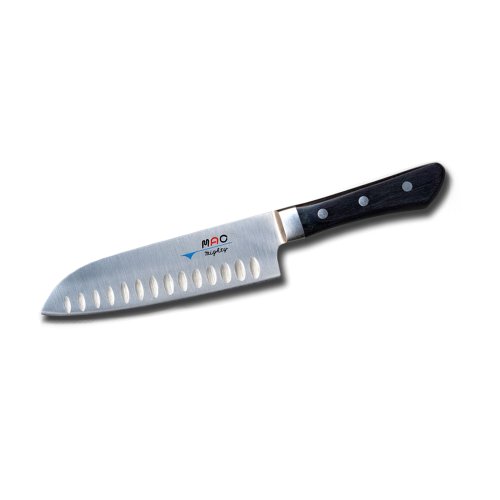
Mac Knife Professional 6.5-Inch Dimpled Santoku Knife
Best for: Precise slicing with food release
- Blade Length
- 6.5"
- Knife Type
- Santoku
- Blade Material
- Sub-zero tempered steel
- Edge Type
- Dimples
- Handle Material
- Pakka wood
- Dimensions
- 6.5 × 1 × 1 inches
View on Amazon: Mac Knife Professional 6.5-Inch Dimpled Santoku Knife Affiliate link
The Mac Knife Professional series 6.5" Santoku (MSK-65) features a razor-sharp edge made from sub-zero tempered steel. This blade retains its sharpness better than original steel. The handle is crafted from black Pakka wood. Weighing 8.8 ounces, it offers a balanced feel. Dimples along the blade help prevent food from sticking. It is made in Japan and requires hand washing.
Pros
- Sub-zero tempered steel retains edge longer
- 6.5-inch blade length for versatile cutting
- Dimples reduce food adhesion
- Pakka wood handle for durability
Cons
- Not dishwasher safe
- Heavier at 8.8 ounces
- Requires hand washing only
Good fit if
- You want a blade that holds its edge longer
- You prefer a Santoku with food-release dimples
- You are comfortable hand washing your knives
Skip if
- You need a dishwasher-safe knife
- You prefer a lighter tool under 8 ounces
- You want a hollow-edge design
Verdict: Mac Knife 6.5" Santoku MSK-65 suits cooks who prioritize edge retention and food release. Its sub-zero tempered steel and dimpled blade make it ideal for precise slicing and chopping tasks.
Specifications side by side
| Spec | Wüsthof Classic 6-Inch Hollow-Edge Chef's Knife | Mac Knife Professional 6.5-Inch Dimpled Santoku Knife |
|---|---|---|
| Blade Length | 6" | 6.5" |
| Knife Type | Chef's Knife | Santoku |
| Blade Material | High Carbon Stainless Steel | Sub-zero tempered steel |
| Construction | Forged | not stated |
| Edge Type | Hollow edge | Dimples |
| Blade Hardness | 58-degree HRC | not stated |
| Handle Material | not stated | Pakka wood |
| Color | Black | Brushed stainless steel blade, black Pakka wood handle |
| Dimensions | 11.2 × 1.57 × 0.59 inches | 6.5 × 1 × 1 inches |
| Weight | 6.08 ounces | 8.8 ounces |
| Size | 6-inch | 6.5" |
| Model | 1040100216 | MSK-65 |
Frequently asked questions
Which knife is lighter, Wüsthof or Mac?
The Mac Knife Professional is heavier than the Wüsthof Classic. The Wüsthof 6-inch Chef's Knife weighs 6.08 ounces. The Mac 6.5-inch Santoku weighs 8.8 ounces. You will feel more weight in the Mac blade. This may affect your preference for lightweight handling during long prep sessions.
Does the Wüsthof have a hollow edge?
Yes, the Wüsthof Classic 6-inch Chef's Knife features a hollow edge. This design creates air pockets along the blade. It reduces friction and drag when slicing. This makes it suitable for tasks requiring reduced resistance. The Mac Knife Professional uses dimples instead of a hollow edge for food release.
What is the blade width of the Wüsthof?
The Wüsthof Classic 6-inch Chef's Knife has a blade width of 1.57 inches. This measurement refers to the height of the blade from spine to edge. The Mac Knife Professional Santoku has a blade width of 1 inch. The wider Wüsthof blade may offer more surface area for pushing food.
Is the Mac handle made of wood?
Yes, the Mac Knife Professional features a black Pakka wood handle. This material provides a traditional grip feel. The Wüsthof Classic has a black handle, but the specific material is not listed in the provided specifications. You should check the handle material if wood is a priority for you.
Which knife is better for reducing drag?
The Wüsthof Classic is best for slicing with reduced drag. Its hollow edge creates air pockets that minimize friction against the food. The Mac Knife Professional is designed for precise slicing with food release via dimples. If your main goal is reducing drag during cuts, the Wüsthof design addresses this directly.
What is the total length of the Mac knife?
The Mac Knife Professional 6.5-Inch Dimpled Santoku Knife has a total length of 6.5 inches. This measurement includes the blade and handle. The Wüsthof Classic 6-inch Chef's Knife has a total length of 11.2 inches. The Mac knife is significantly shorter overall, which may suit smaller hands or limited storage space.
Does the Wüsthof have a specific model number?
Yes, the Wüsthof Classic 6-inch Chef's Knife has the model number 1040100216. This identifier helps you find exact replacement parts or verify authenticity. The Mac Knife Professional has the model number MSK-65. Knowing the model number ensures you are comparing the correct specifications for each brand.