Stainless Steel vs Damascus Steel Kitchen Knives in 2026: Key Differences
As an Amazon Associate we earn from qualifying purchases. Links on this page are affiliate links.
When comparing stainless steel vs damascus steel kitchen knife options, you face distinct material choices. Both Imarku and SHAN ZU offer Japanese-style blades with 15° edge angles for precision cutting. The primary difference lies in their construction and hardness. The Imarku set uses high-carbon Japanese stainless steel with a 57 HRC rating, while the SHAN ZU knife features a 67-layer Damascus core hardened to 62 HRC. These specs dictate how each tool performs in your kitchen.
Key differences
| Aspect | Imarku 3-Piece Japanese Stainless Steel Knife Set | SHAN ZU 8-Inch Damascus Chef Knife |
|---|---|---|
| Blade Material | High-carbon Japanese stainless steel | 10Cr15Mov Damascus Japanese steel |
| Construction | Standard forged blade | 67-layer forged Damascus |
| Blade Hardness | 57±1 HRC | 62 HRC |
| Handle Material | Pakkawood | Frosted glass fiber G10 |
| Set Contents | 3 pieces (Chef, Nakiri, Paring) | 1 piece (Chef) |
Which one should you choose?
Choose Imarku 3-Piece Japanese Stainless Steel Knife Set if
- You want a complete set with multiple knife types for daily tasks
- You prefer a lighter handle made from traditional pakkawood
- You prioritize corrosion resistance with a lower hardness rating
Choose SHAN ZU 8-Inch Damascus Chef Knife if
- You need a harder blade that holds a sharp edge longer
- You want a water-resistant G10 handle that is easy to clean
- You prefer the aesthetic and toughness of layered Damascus steel
Verdict: The Imarku set suits you if you need a versatile trio of knives for general prep work. The SHAN ZU knife is better if you prioritize maximum edge retention and a durable, moisture-resistant handle. Choose based on whether you value set variety or single-blade performance.
Stainless vs Damascus Steel Knives
Blade Material
The Imarku set utilizes high-carbon Japanese stainless steel, a choice that prioritizes corrosion resistance and ease of maintenance. This material is vacuum heat treated to balance durability with practical daily use. In contrast, the SHAN ZU knife features 10Cr15Mov Damascus Japanese steel. This construction involves layering sheets of carbon steel and applying repeated heat treatments and forging. The result is a blade with a distinct visual pattern that becomes more visible after polishing. While both use Japanese steel origins, the Damascus build offers a layered complexity that stainless steel lacks.
Blade Hardness
Hardness significantly impacts edge retention and sharpening frequency. The Imarku knives reach a hardness of 57±1 HRC after advanced vacuum heat treatment. This level provides excellent edge retention while maintaining enough toughness to resist chipping during heavy tasks. The SHAN ZU Damascus chef knife achieves a higher hardness of 62 HRC. This superior hardness allows the blade to stay sharper for longer periods and offers greater wear resistance. However, higher hardness can sometimes require more careful handling to prevent brittleness. For users prioritizing long-lasting sharpness with minimal maintenance, the higher HRC rating is a clear advantage.
Construction
Construction methods define the structural integrity and aesthetic of each blade. The Imarku set features knives with a 2.3mm blade thickness, crafted through hand-polishing by skilled craftsmen. This uniform thickness supports stability during chopping and slicing. The SHAN ZU knife employs a forged construction with 67 layers of steel. This layering enhances wear resistance, rust prevention, and toughness. The blade thickness is 2.2mm, slightly thinner than the Imarku, which may offer a marginally smoother glide through ingredients. The layered Damascus structure provides a unique combination of strength and flexibility that solid stainless steel cannot replicate.
Edge Type
Both products share a 15° double bevel edge angle, which is standard for Japanese-style knives designed for precision cutting. This angle allows both the Imarku and SHAN ZU blades to glide effortlessly through vegetables, fruits, fish, and meat. The double bevel design makes these knives ambidextrous, suitable for both left and right-handed users. Since the edge angle is identical, neither product holds a technical advantage in terms of cutting geometry. The difference lies in how the edge is maintained, with the harder SHAN ZU blade potentially holding its 15° sharpness longer than the Imarku set.
Handle Material
The handle material affects grip comfort and long-term durability. The Imarku set uses an ergonomic Pakkawood handle, which offers a comfortable grip and balanced control. Pakkawood is known for its resistance to moisture and heat, making it suitable for kitchen environments. The SHAN ZU knife features a frosted glass fiber G10 handle. This material is described as more solid and comfortable than wood, providing a top-balanced professional feel. G10 is highly durable and resistant to water and chemicals. For users who prefer a modern, indestructible grip, the G10 handle on the SHAN ZU is superior.
Which Knife Set Fits Your Needs
Home cooks needing a complete set
You need versatility for daily tasks. This set includes an 8-inch chef knife, a 7-inch nakiri for vegetables, and a 3.5-inch paring knife for precision. The high-carbon stainless steel offers 57 HRC hardness for reliable edge retention. The pakkawood handle provides a comfortable, balanced grip for extended prep work without fatigue.
Users prioritizing maximum sharpness and durability
You want a blade that stays sharp longer. This knife uses 10Cr15Mov Damascus steel with 67 layers forged for toughness. It reaches 62 HRC hardness, significantly harder than standard stainless options. The 15-degree edge angle ensures precision cutting. The frosted glass fiber G10 handle offers a solid, ergonomic grip that resists wear.
Buyers seeking low maintenance and corrosion resistance
You prefer knives that resist rust and require minimal care. The high-carbon Japanese stainless steel construction provides excellent corrosion resistance. This material is easier to maintain than layered Damascus steel. You get a complete set with a chef, nakiri, and paring knife, all featuring a double-bevel 15-degree edge for consistent, easy sharpening and cleaning.
Quick picks
| # | Product | Best for | Price |
|---|---|---|---|
| 1 | Imarku 3-Piece Japanese Stainless Steel Knife Set | Daily cooking tasks and stainless steel preference | Check price of Imarku 3-Piece Japanese Stainless Steel Knife Set on Amazon |
| 2 | SHAN ZU 8-Inch Damascus Chef Knife | Users seeking high hardness and durable handles | Check price of SHAN ZU 8-Inch Damascus Chef Knife on Amazon |
The products compared
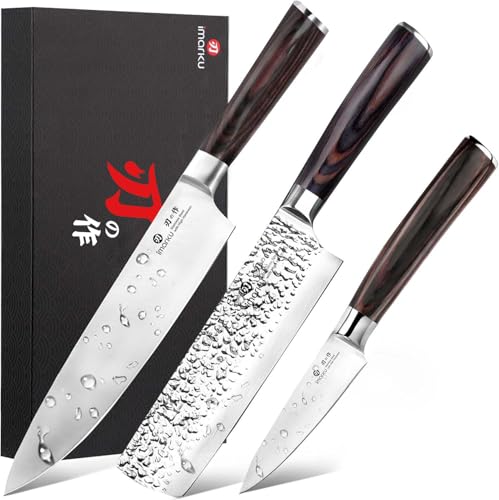
Imarku 3-Piece Japanese Stainless Steel Knife Set
Best for: Daily cooking tasks and stainless steel preference
- Blade Material
- Stainless Steel (what this guide is about)
- Knife Type
- Chef, Nakiri, Paring
- Edge Type
- Double bevel
- Edge Angle
- 15°
- Blade Hardness
- 57±1 HRC
- Handle Material
- Pakkawood
View on Amazon: Imarku 3-Piece Japanese Stainless Steel Knife Set Affiliate link
This Imarku set includes an 8-inch chef knife, 7-inch nakiri, and 3.5-inch paring knife. Crafted from high-carbon Japanese stainless steel, the blades feature a 15° double bevel edge and 2.3mm thickness for precision. The steel reaches 57±1 HRC hardness through vacuum heat treatment. Ergonomic pakkawood handles provide balanced control. This stainless steel option suits cooks seeking durable, sharp tools for daily tasks.
Pros
- 15° double bevel edge angle for sharp cutting precision
- High-carbon Japanese stainless steel blade material
- 57±1 HRC blade hardness for edge retention
- Ergonomic pakkawood handle for comfortable grip
- Includes versatile 8-inch chef, 7-inch nakiri, and 3.5-inch paring knives
Cons
- Stainless steel construction lacks the layered aesthetic of Damascus steel
- Smaller 3-piece set compared to larger comprehensive knife collections
- Requires hand washing to maintain blade condition
Good fit if
- You prefer the low-maintenance corrosion resistance of stainless steel
- You need a focused set of essential knives for daily cooking
- You value a narrow 15° edge angle for precision slicing
Skip if
- You specifically want the decorative layered look of Damascus steel
- You require a large collection of specialized knives for professional use
- You prefer a single-piece full tang construction over a pinned handle
Verdict: Imarku 3-Piece Japanese Stainless Steel Knife Set delivers sharp, durable stainless steel blades with a precise 15° edge. It fits home cooks who prioritize easy maintenance and essential cutting tools over decorative Damascus patterns.
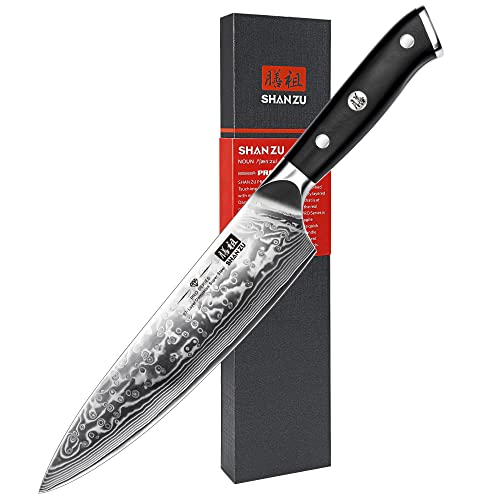
SHAN ZU 8-Inch Damascus Chef Knife
Best for: Users seeking high hardness and durable handles
- Blade Material
- Damascus Steel (what this guide is about)
- Blade Length
- 8 in
- Knife Type
- Chef Knife
- Construction
- Forged, 67 layers
- Edge Angle
- 15°
- Blade Hardness
- 62 HRC
View on Amazon: SHAN ZU 8-Inch Damascus Chef Knife Affiliate link
This SHAN ZU chef knife uses a 10Cr15Mov Japanese steel core with a 67-layer Damascus pattern. The blade reaches 62 HRC hardness for lasting sharpness. You get an 8-inch blade with a 15-degree edge angle. The handle is frosted glass fiber G10 for a solid grip. It weighs 270 grams. This knife suits those who want high hardness and a traditional forged look.
Pros
- 62 HRC blade hardness for superior edge retention
- 67-layer forged Damascus construction
- 15-degree edge angle for precise cutting
- Frosted glass fiber G10 handle for durability
Cons
- 270-gram weight may feel heavy for extended use
- G10 handle texture is not traditional wood
- No specific rust-proof coating listed beyond steel composition
Good fit if
- You prefer a high-hardness blade that holds an edge well
- You want a durable G10 handle that resists moisture
- You like the look of forged Damascus patterns
Skip if
- You need a lightweight knife for delicate tasks
- You prefer a traditional wooden handle feel
- You want a pre-sharpened edge with no maintenance
Verdict: SHAN ZU 8" Damascus Chef Knife delivers a hard, durable blade with a distinctive forged look. It fits cooks who value edge retention and a solid, non-wood handle over lightweight ease of use.
Specifications side by side
| Spec | Imarku 3-Piece Japanese Stainless Steel Knife Set | SHAN ZU 8-Inch Damascus Chef Knife |
|---|---|---|
| Blade Length | not stated | 8 in |
| Knife Type | Chef, Nakiri, Paring | Chef Knife |
| Blade Material | High-Carbon Japanese Stainless Steel | 10Cr15Mov Damascus steel |
| Construction | not stated | Forged, 67 layers |
| Edge Type | Double bevel | not stated |
| Edge Angle | 15° | 15° |
| Blade Hardness | 57±1 HRC | 62 HRC |
| Handle Material | Pakkawood | G10 |
| Style | Japanese | Japanese |
| Dimensions | not stated | 13.2 × 1.18 × 1 inches |
| Weight | not stated | 9.17 ounces |
| Size | 8" | 8" |
| Color | Red-brown | Chef Knife |
| Model | P31 | SZPCS-2017-002 |
Frequently asked questions
Is stainless steel better than Damascus for home cooks?
Stainless steel is often better for daily home use due to its low maintenance. The Imarku set uses high-carbon Japanese stainless steel that resists corrosion and requires less care. It offers a precise 15-degree edge angle for reliable performance. You get a complete set with an 8-inch chef knife, a 7-inch nakiri, and a 3.5-inch paring knife for versatile tasks.
Does Damascus steel hold an edge longer than stainless?
Damascus steel can offer superior edge retention due to its higher hardness. The SHAN ZU knife features a hardened blade designed for durability and long-lasting sharpness. It has a 15-degree edge angle similar to stainless options but prioritizes hardness over ease of maintenance. This makes it suitable for users who value a solid, non-wood handle and a forged look.
What is the main difference in blade material between these knives?
The primary difference lies in the steel composition and resulting properties. The Imarku set uses high-carbon Japanese stainless steel, which balances durability with easy cleaning. The SHAN ZU knife uses Damascus steel, which provides a distinctive forged appearance and higher hardness. Both styles utilize Japanese manufacturing techniques to achieve precision cutting capabilities for your kitchen.
Are these knives made with a Japanese style?
Yes, both options feature Japanese-style construction. The Imarku set and the SHAN ZU knife are both categorized as Japanese style. This design typically includes thinner blades and acute edge angles for better slicing precision. The Imarku set includes an 8-inch chef knife, while the SHAN ZU offers an 8-inch chef knife with a width of 1.18 inches.
Which knife is lighter and easier to handle?
The SHAN ZU Damascus knife weighs 9.17 ounces, providing a solid feel. Its total length is 13.2 inches with a height of 1 inch. The Imarku set includes multiple knives, but specific weights for individual pieces are not listed. If you prefer a single, substantial tool, the SHAN ZU offers a defined weight profile. For a full set, the Imarku provides varied sizes for different tasks.
What edge angle do these knives have?
Both knives feature a 15-degree edge angle. This acute angle allows for precise cutting and sharper performance compared to standard Western knives. The Imarku stainless steel blades maintain this angle for consistent results. The SHAN ZU Damascus blade also uses this 15-degree specification. This common feature ensures both options deliver sharp, controlled cuts for various food preparation needs.